The wardrobe
The Custom Wardrobe
Build your wardrobe around how often you dress for work, evenings and travel. Start with the garment you need most, then add pieces that create useful combinations. A reliable rotation matters more than owning a prescribed number of suits.
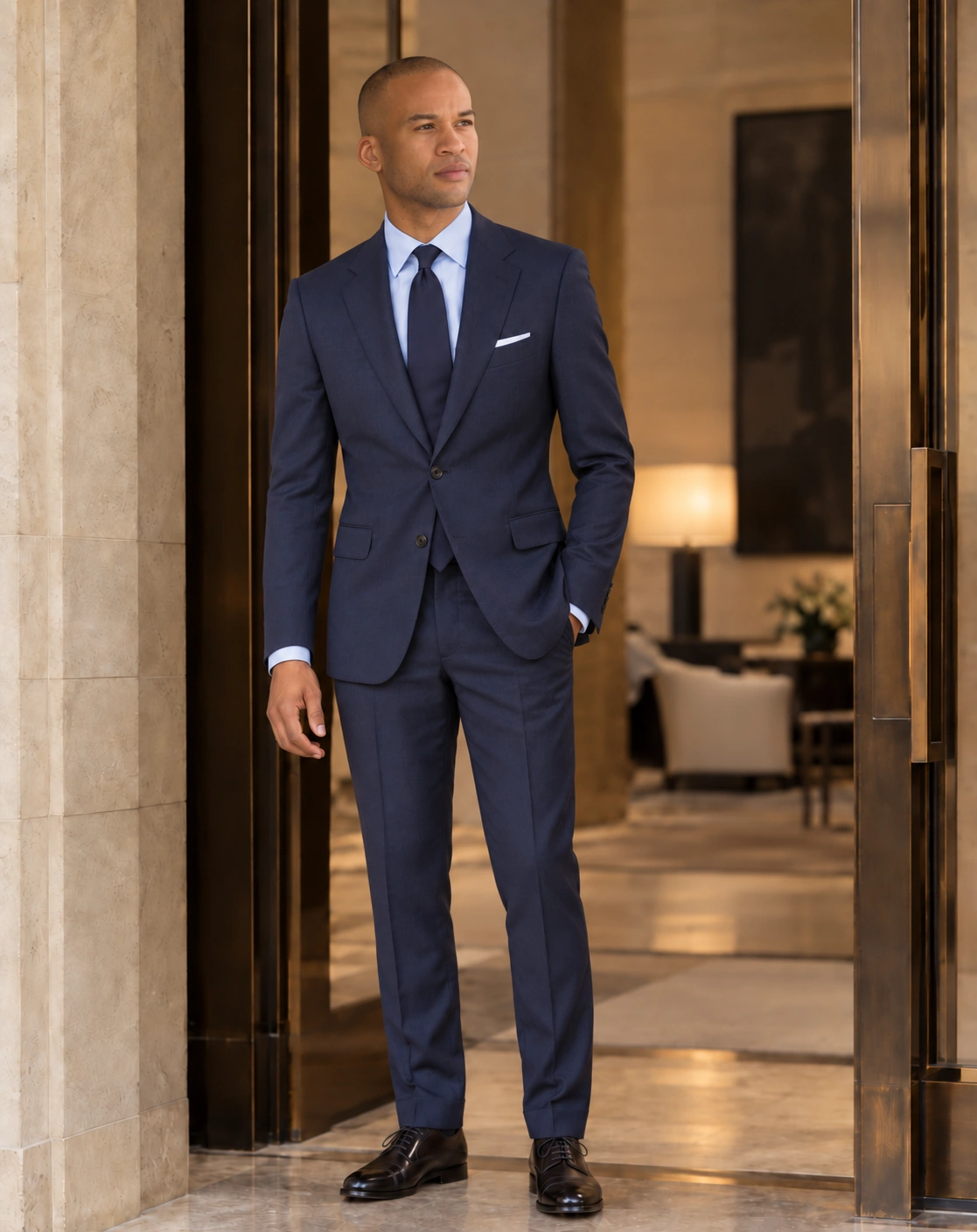
Build around your working week
Bring a short account of your working week, the occasions ahead and the garments that already earn their place. Your clothier can identify a missing piece without replacing clothing that serves you well. If you wear a suit twice a month, your first order may be different from that of someone who wears one every weekday.
Build around combinations. A navy jacket needs trousers with enough difference in color and texture to look deliberate. A formal shirt needs a collar and cuffs that work with its jacket. An overcoat must accommodate the layers beneath it. These relationships make a wardrobe useful.
How many suits do you need?
There is no required number. Frequency of wear, climate, care arrangements and the occasions on your calendar provide a useful starting point. The ranges below are planning examples, not a purchase requirement.
| How often you wear a suit | Possible starting rotation | What may change the number |
|---|---|---|
| Occasional events | One versatile suit | Different dress codes or a need for eveningwear |
| Once or twice a week | Two or three suits | Climate, travel and time between wears |
| Most working days | Three to five suits | Variety of duties, care arrangements and seasonal needs |
| Frequent wear across climates | Build from the working rotation | Add a distinct weight or weave when the need is real |
A navy or charcoal suit can establish a useful foundation. A second might change the color; a later suit might change the season or degree of formality. Add a suit when it serves a gap in your rotation. A tuxedo answers black tie and does not replace a business suit.
Let garments air between wears and keep care appropriate to the cloth. Suit care explains the practical routine without attaching a fixed lifespan to any rotation. More garments are useful only when they earn their place.
Give each garment its own pattern
Enzo develops an individual pattern for each garment category. A shirt is not a smaller jacket, and an overcoat is not a suit jacket enlarged uniformly. Each has different requirements for balance, movement and ease. Choosing a custom suit explains the foundation; the shirt guide addresses the layer closest to the body.
| Your recurring need | A useful starting garment | Next decision |
|---|---|---|
| Frequent business dress | A versatile suit | Rotation and a second trouser |
| Meetings without a suit | A separate jacket | Contrasting trousers and shirt collars |
| Regular formal invitations | A tuxedo | Shirt and complete evening accessories |
| A mixed working week | Shirts and separate trousers | Cloth that works across combinations |
| Cold-weather layering | An overcoat | Fit over your actual jacket |
Add a different season or purpose
A new color can add less than a different weight or weave. Two dark blue suits may serve distinct purposes if one is crisp and open in weave and the other fuller for cooler weather. Equally, a narrow variation between two cloths may not justify owning both.
Discuss frequency of wear before choosing exceptional fineness. A cloth for a special evening can have different priorities from one that must withstand regular rotation. Our cloth collection is organized around those decisions.
Refine the wardrobe as you wear it
We retain your pattern, fitting corrections and preferences. For later orders, we review changes in your body and how the earlier garment has performed. This record makes the next discussion more precise; it does not remove the need to reassess fit.
Start with one useful garment and expand as your routine requires. Explore the collections, then bring your priorities to a private appointment. A coordinated wardrobe should make getting dressed easier, with every piece earning its place.
For the design of the next suit, compare lapels, pockets and vents, the overlap of a double-breasted front and the additional layer of a three-piece suit. Choose the design for the occasions on your calendar.
The wardrobe
Questions and answers
How many suits should I own?
As flexible starting examples, one versatile suit may serve occasional use, two or three may support weekly wear, and three to five can establish a frequent working rotation. Adjust the number for climate, care, dress codes and budget rather than treating it as a rule.
Do I need to order a complete wardrobe at once?
No. Begin with the garment that answers your most frequent need and add complementary pieces over time.
Can one pattern be used for every category?
Each category receives appropriate individual pattern development. Shirts, trousers and overcoats have different balance and movement requirements.
Should all my jackets use the same cloth weight?
No. The right mix depends on where, when and how often you wear them. Weave and lining matter alongside weight.
What should I bring to a wardrobe appointment?
Bring an account of your routine, upcoming events and any garments you want the new garment to complement.
Continue reading
Everything we make is cut for one man.
Always custom. Never off the rack.
Book a private appointment