Cloth & mills
Our Fabric Partners
Explore the fabric houses behind Enzo Custom: Loro Piana, Dormeuil, Holland & Sherry, Vitale Barberis Canonico, Drago and Guabello, alongside Zegna, Scabal, Solbiati and Enzo Sartori. Your clothier helps you choose the particular cloth for your wardrobe.
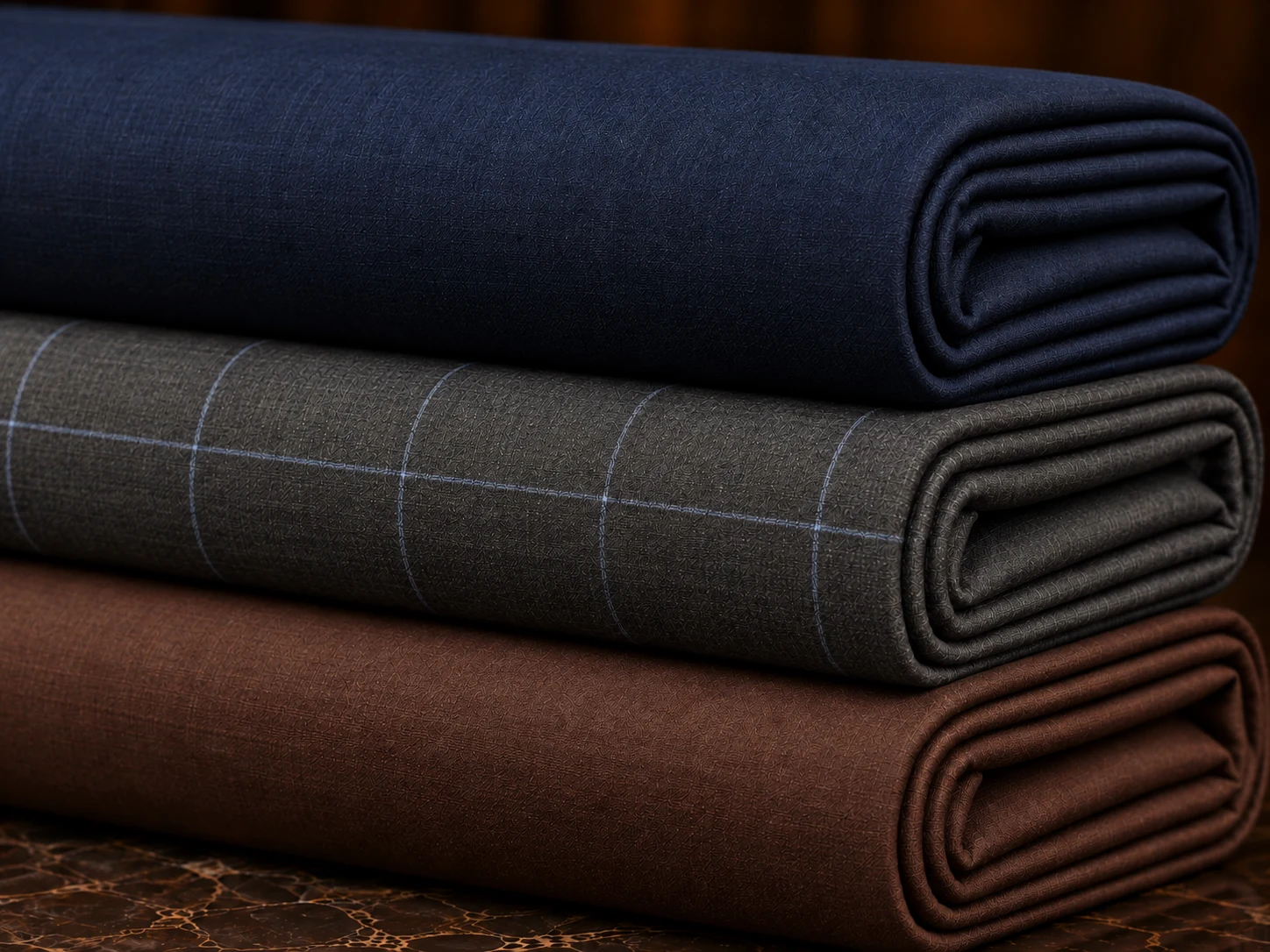
Know what each collection offers
Enzo brings together established mills and cloth merchants, each with its own history and material expertise. Loro Piana, Dormeuil, Holland & Sherry, Vitale Barberis Canonico, Drago and Guabello are central to our selection, alongside the other fabric houses below. Compare their cloth through its yarn, weave, weight and finish, then consider how it will feel and fall as your garment.
Use the named selections below as reference points. Your clothier confirms the cloths, colors and books available for your order and compares the samples with your intended garment.
| Source or collection | A useful point of distinction |
|---|---|
| Loro Piana | Tasmanian appears in both pinstriped and birdseye suiting; pattern remains a separate choice from the collection name |
| Zegna | Trofeo uses superfine Australian Merino; 15milmil15 identifies a separate fine-wool selection |
| Dormeuil | Amadeus, Tonik Wool and Ceremonial address different handles and uses, from suiting to evening cloth |
| Scabal | Jet Set provides a published example of Super 150’s wool in a 280-gram twill-based suiting |
| Vitale Barberis Canonico | Perennial uses Super 110’s Merino at 260 grams; Montecarlo combines 21-micron wool with a hopsack structure |
| Holland & Sherry | Crispaire uses pure wool in a traditional plain weave with a coarse yarn count and a substantial handle |
| Drago | BlueFeel combines natural stretch fabrics with a focus on practical wearing properties |
| Solbiati | Art Du Lin uses pure linen and two- or three-ply yarns across different weights |
| Enzo Sartori | Super 160s–180s three-ply wool, Super 200s two- and three-ply wool, and 100% Peruvian vicuña |
| Guabello | Biella wool expertise since 1815, with classic Merino suitings and selected natural-stretch collections |
Learn more in our guides to Loro Piana, Zegna and Dormeuil. Each explains the material choices behind the named programs.
Loro Piana
Founded in Quarona, Piedmont, in 1924, Loro Piana brings a century of textile knowledge to fine tailoring. Its work begins with carefully selected fibers, including extra-fine Merino wool, and continues through the yarn, weave and finish. That attention gives your clothier a rich range of surfaces and drapes to explore, from refined wool suitings to softer cloths for a more relaxed garment.
Compare the available cloth in your hand and against the way you dress. The Loro Piana fabric guide explores its material expertise and how Enzo develops your garment around the selection.
Dormeuil
Dormeuil began in 1842 by bringing English cloth to French clients. The house retains that connection between French design and British textile knowledge, with cloth woven in England and Italy. Its collections explore fine Merino, mohair, cashmere, silk and linen, with finishing central to the feel and appearance of the material.
The range can suggest quite different garments: smooth business suiting, crisp formal cloth or an expressive evening texture. Our Dormeuil guide explains how Amadeus, Tonik Wool and other selections differ.
Holland & Sherry
Founded in London in 1836, Holland & Sherry is a British cloth merchant with a broad tailoring tradition. Its collections span fine worsted suiting, tweeds, cashmere and cloth for formal occasions. Crispaire, for example, was developed with business travel in mind, pairing a substantial worsted-wool character with crease recovery. The individual cloth guides the choice: a crisp working suit, a textured separate jacket or a quieter formal garment.
Vitale Barberis Canonico
Vitale Barberis Canonico’s wool-making history is documented in 1663. Based in Pratrivero in Italy’s Biella region, the mill develops fabrics with distinct purposes. Perennial offers Super 110’s Merino for business and formal suits; the 21 Micron range gives more substantial wool fibers a deliberate role in cloths such as flannel and hopsack. It is a useful reminder that character, weave and intended wear deserve as much attention as fineness.
Drago
Drago began as a spinning business in 1973, and its knowledge of yarn remains central to its fabrics. The integrated Biella mill brings together spinning, weaving and finishing across its operations in Lessona and Verrone. Alongside fine worsted suitings, collections such as BlueFeel explore natural stretch and practical wearing properties. At the appointment, compare the particular cloth’s touch, structure and weight with the movement and shape you want from the garment.
Guabello
Guabello has worked with wool since 1815, drawing on Biella’s textile heritage and a substantial design archive. Its range moves from the Merino tailoring cloths of OneThirty and Connoisseur to collections such as Space and Motion, where natural stretch informs the design. This gives the selection room for both a composed business silhouette and a more relaxed interpretation, with the exact cloth, finish and construction chosen for your wardrobe.
Enzo Sartori: fine wool with substance
Enzo Sartori brings together fine wool grades and a fuller cloth character. The wool selection begins at Super 160s three-ply, extends through Super 180s three-ply, and includes Super 200s in both two- and three-ply. The specified yarn construction runs in both directions of the cloth: warp and weft.
| Enzo Sartori selection | Warp | Weft |
|---|---|---|
| Super 160s–180s wool | Three-ply | Three-ply |
| Super 200s wool, two-ply selection | Two-ply | Two-ply |
| Super 200s wool, three-ply selection | Three-ply | Three-ply |
Ply describes the strands combined into a yarn. Warp runs along the length of the cloth; weft crosses it. A Super number describes wool-fiber fineness, so the yarn’s construction is a separate specification worth reading alongside it.
Much of Enzo Sartori’s wool has a medium-to-heavier weight character. Assess that substance in the sample and in its stated weight: three-ply alone does not determine how heavy or warm a cloth will be. These selections are not confined to winter; the particular weave, construction, climate and intended use guide the choice. Our cloth-weight guide explains how to make that assessment.
Enzo Sartori also offers 100% vicuña from Peru. Discuss its handle, intended garment and care with your clothier. The wool grades and ply specifications above describe the wool selections; vicuña is a separate fiber choice.
Compare suiting and jacket cloth by purpose
Published specifications make a useful starting point. Scabal’s Jet Set demonstrates that a fine Super designation can appear in a cloth with appreciable weight. Vitale Barberis Canonico’s Perennial and Montecarlo demonstrate a different distinction: a business suiting and an airy hopsack jacket cloth can sit relatively close in weight while serving different purposes.
Use the same approach at the appointment. Compare two business cloths against the same routine, or two jacket fabrics against the same trousers. Our cloth guide explains the relationship between fiber, weave, weight and finish.
Crisp wool, natural stretch and linen
Holland & Sherry describes Crispaire through its plain weave, coarse yarn count and recovery. Drago’s BlueFeel emphasizes natural stretch and performance properties. Those descriptions give you questions to ask about a sample: how does it feel, how does it fall, and what will the finished garment need to do?
For linen, Solbiati’s Art Du Lin uses two- or three-ply yarns in a range of weights. Linen is therefore not a single light, loosely woven proposition. Compare substance and texture as carefully as color when planning a summer suit or separate jacket.
Keep cloth and tailoring connected
With cloth from any of these sources, Enzo creates the individual pattern and develops the garment through construction and fittings. The fabric name identifies the material; Enzo makes your finished garment.
For custom suits and separate jackets, we establish the exact cloth and complete garment specification before production. Availability and any imported-cloth lead time are checked against your plans. Your clothier confirms the final garment price before production.
Questions and answers
What distinguishes Enzo Sartori cloth?
The selection combines fine wool grades with two- and three-ply yarns in both warp and weft: Super 160s–180s three-ply and Super 200s two- or three-ply. Much of the wool has a medium-to-heavier weight character. The range also includes 100% Peruvian vicuña.
Does a mill name guarantee that a fabric is right for me?
No. Suitability depends on the exact composition, weave, finish and intended use.
Are all fabrics permanently available?
No. We confirm availability for your actual selection before production.
Can I request material and origin information?
Yes. Your clothier can explain the selected fabric and the supporting information available for it.
Does Enzo Sartori use three-ply yarns in both directions?
Yes. The three-ply wool selections use three-ply yarns in both warp and weft. The Super 200s two-ply selection uses two-ply yarns in both directions.
Is Enzo Sartori only for winter garments?
No. Much of the wool has a medium-to-heavier weight character, but suitability depends on the individual cloth, weave, garment construction and wearing conditions. Compare the sample and its weight with your clothier.
Continue reading
Everything we make is cut for one man.
Always custom. Never off the rack.
Book a private appointment