
The Unseen Elegance: Exploring the Importance of Suit Canvas
When it comes to the artistry of tailored clothing, one element often overlooked is the suit canvas.
When it comes to the artistry of tailored clothing, one element often overlooked is the suit canvas. It's the invisible foundation that determines the shape, structure, and overall quality of a suit jacket. Essentially, the canvas is the backbone of a well-crafted suit, quietly working its magic beneath the surface to ensure a flawless silhouette.
There are two main types of suit canvas: fused and floating. Fused canvas involves bonding the canvas layer to the outer fabric using heat and adhesive, providing a stiffer, more uniform appearance. On the other hand, floating canvas, often considered the hallmark of bespoke tailoring, is stitched loosely to the outer fabric, allowing the jacket to mold to the wearer's body over time. This results in a garment that not only fits impeccably but also offers unparalleled comfort and freedom of movement.
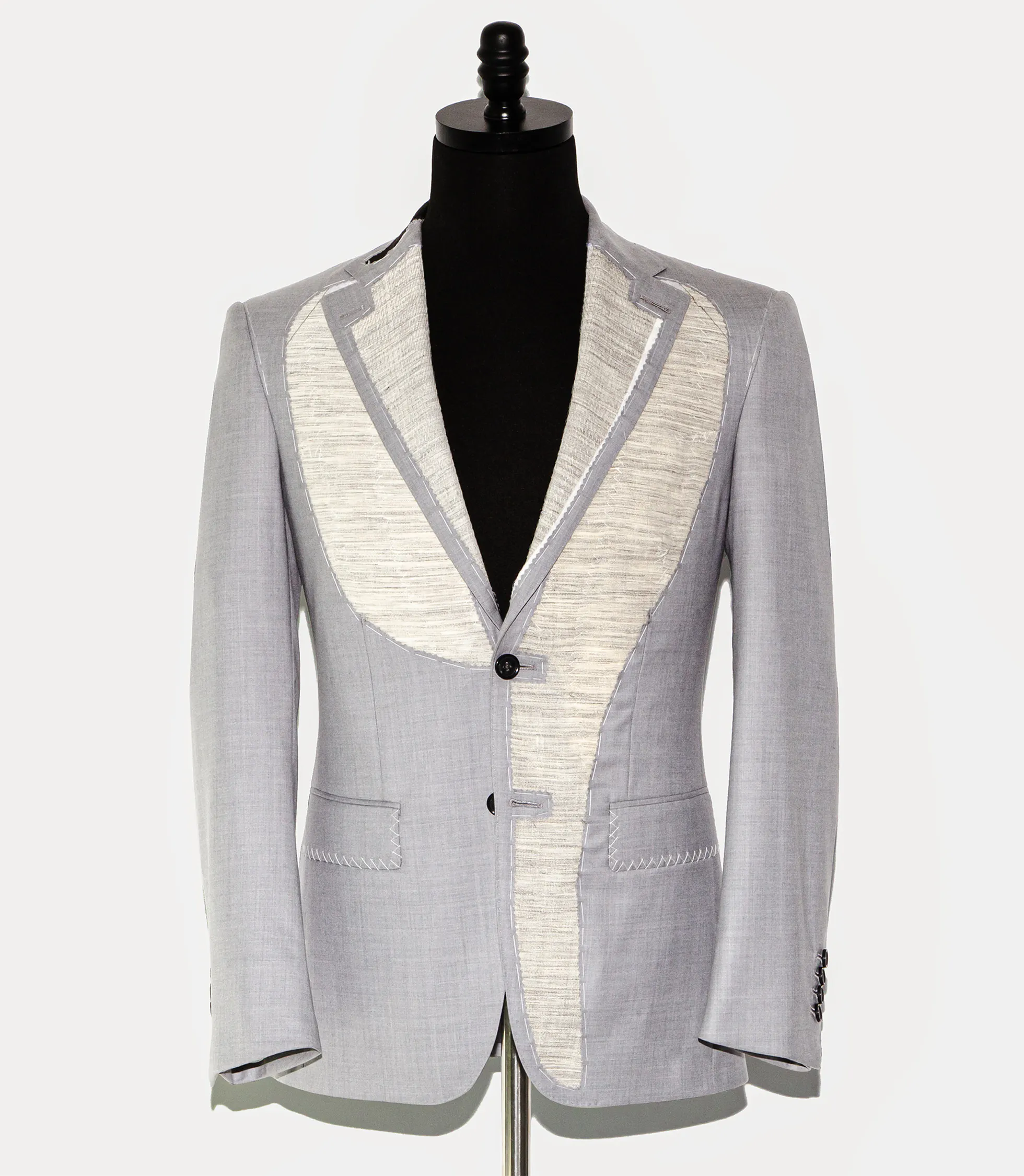
The choice between fused and floating canvas ultimately comes down to personal preference and budget. While fused canvas suits are generally more affordable and easier to manufacture, floating canvas suits offer a level of craftsmanship and customization that is unmatched. The meticulous handwork involved in creating a floating canvas jacket speaks to the dedication and expertise of the tailor, resulting in a garment that exudes elegance and sophistication.
While suit canvas may not be visible to the naked eye, its importance cannot be overstated. From enhancing the drape of the fabric to ensuring a perfect fit, the canvas is the unsung hero of every well-made suit. So the next time you don your favorite jacket, take a moment to appreciate the craftsmanship of its canvas—it's the subtle detail that elevates ordinary attire to extraordinary elegance.
Begin With a Private Appointment
Explore cloth, fit, and occasion with an Enzo Custom clothier. Reserve a private appointment at your nearest showroom.
No obligation · By appointment
More from the Journal

On Cashmere: Grades, Origins, and What Quality Looks Like
Most men own a cashmere garment. Few can, on inspection, tell whether the garment they own is good cashmere or merely cashmere. The fiber has been so democratized — by the mall brands, by the e-commerce labels, by the seasonal sale racks — that the word itself has lost most of its meaning. The original meaning is recoverable. It requires a small vocabulary and a willingness to handle the cloth long enough to read it.

The Double-Breasted Suit, Considered
The double-breasted suit has spent much of the last forty years out of fashion, then quietly back in it, then out again. Each of these movements obscures a more durable fact: the silhouette is its own grammar, and a man who understands its rules does not need to track its returns. The double-breasted is the most architecturally distinct cut in a man’s wardrobe — and, in its proper form, the most quietly authoritative.

The Black Suit: Considered Beyond Funerals
The black suit has a complicated reputation in contemporary menswear. For decades, it was the suit a man owned for funerals — a single piece in the closet that came out only for sad occasions and was otherwise treated as too somber for ordinary wear. The recommendation in most menswear writing is to skip the black suit entirely and choose a charcoal or navy as the foundational dark suit.