
Elevate Every Occasion: The Timeless Tuxedo
Life's grandest moments deserve nothing less than sartorial perfection.
In the pantheon of men's attire, the tuxedo stands unparalleled. Synonymous with elegance, it has been the ensemble of choice for the most prestigious events, from black-tie galas to cinematic red carpets. Let's explore the enduring appeal of the tuxedo for formal events.
A Brief History
The tuxedo's origins trace back to the late 19th century. Designed as a less formal alternative to the tailcoat, it quickly became the go-to attire for evening soirées and has retained its esteemed position ever since.
Signature Features
The tuxedo's distinguishing features include its satin or grosgrain lapels, a stripe along the outseam of the trousers, and a side-fastened waist covering, such as a cummerbund or waistcoat. These elements combine to create an ensemble that exudes both tradition and sophistication.
Choosing the Perfect Tuxedo
-Fit: A well-fitted tuxedo is paramount. Ensure the jacket's shoulders align with your own, and the trousers have a slight break at the shoes.
-Color: While classic black remains a favorite, navy and charcoal offer contemporary alternatives without straying from the tuxedo's formal roots.
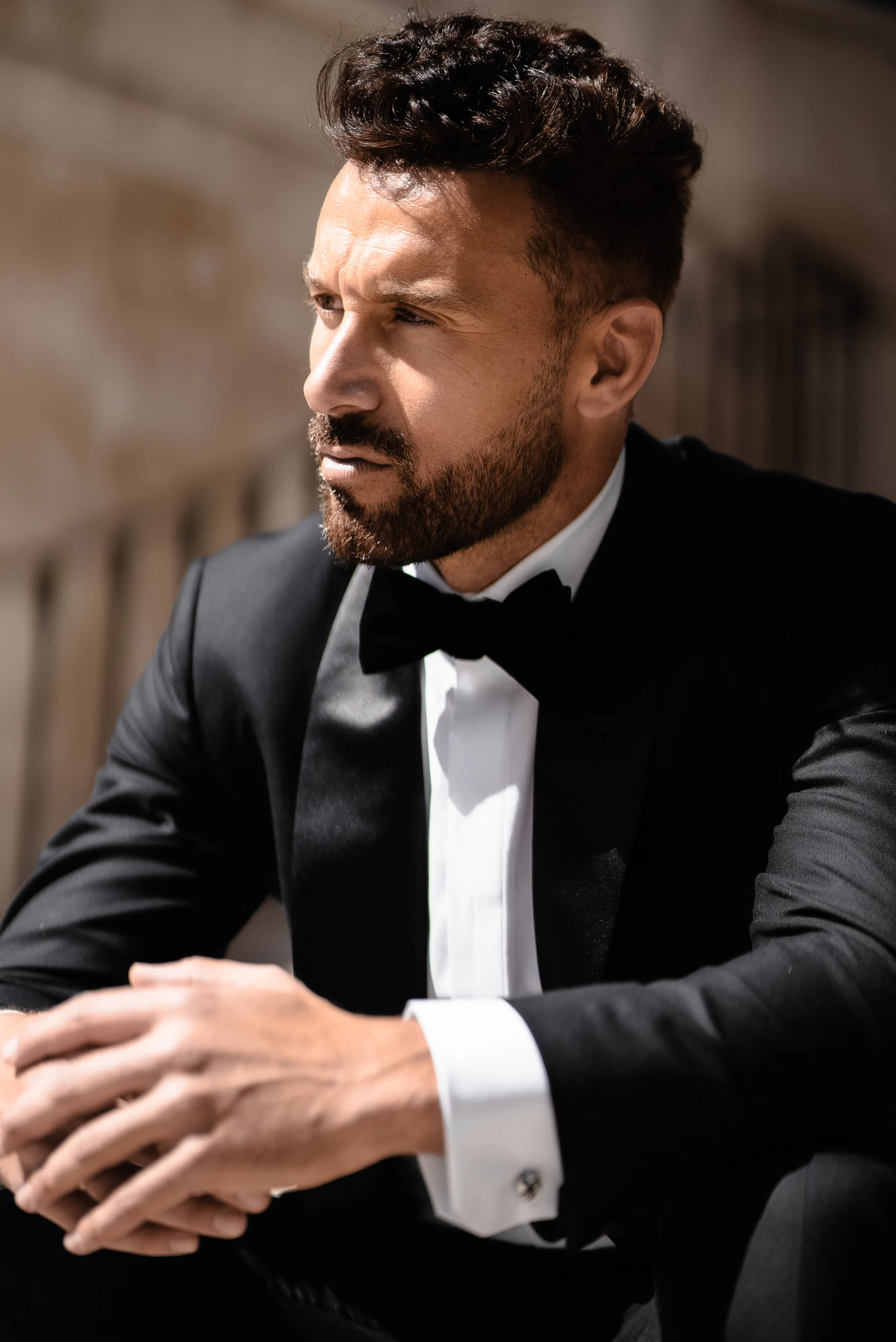
-Accessories: Elevate your ensemble with polished shoes, a crisp white shirt, and timeless accessories like cufflinks or a satin bowtie.
The Enzo Custom Touch
At Enzo Custom, we understand the significance of formal events. Our expertly tailored tuxedos are crafted using premium fabrics, ensuring you not only look the part but feel exceptional too. After all, life's grandest moments deserve nothing less than sartorial perfection.
Begin With a Private Appointment
Explore cloth, fit, and occasion with an Enzo Custom clothier. Reserve a private appointment at your nearest showroom.
No obligation · By appointment
More from the Journal

The Black Suit: Considered Beyond Funerals
The black suit has a complicated reputation in contemporary menswear. For decades, it was the suit a man owned for funerals — a single piece in the closet that came out only for sad occasions and was otherwise treated as too somber for ordinary wear. The recommendation in most menswear writing is to skip the black suit entirely and choose a charcoal or navy as the foundational dark suit.
The Showroom in Beverly Hills: Rodeo Drive
Our Beverly Hills showroom sits on South Rodeo Drive, in a building whose neighbors include the most established luxury houses in American retail. The choice of address was deliberate. A custom tailoring house that operates in Los Angeles needs to be where the city's most discerning clients already shop, and Rodeo Drive remains the address that gathers those clients in one block.

The Trousers: Pleats, Cuffs, and the Quiet Detail
Trousers are the half of a suit that men think about least and that, in fact, do the most invisible work. A jacket can be slightly imperfect and still photograph well. Trousers cannot. The lines of the trousers — how they break, how they hang, where they fall on the shoe, whether they pull or pool — are visible from every angle and across every motion. The trousers are the foundation, and they deserve more attention than they typically receive.