Buying a Custom Tuxedo: Everything You Need to Know
It might seem like a suit is good enough for every occasion. But there are certain times where you might need a tuxedo. If you’re confused about the difference between a tux and a nice suit, here's a guide made just for you
It might seem like a suit is good enough for every occasion. But there are certain times where you might need a tuxedo. At one point or another, you may get invited to a wedding—as more of your friends decide to settle down—or an important black-tie fundraiser or awards dinner. Who knows; maybe you’ll end up at the Oscars one day.
The point is, times can come up in your life when you’ll need a tuxedo instead of your work suit. So whether you wait until that occasion comes or you want to get ahead of the game, you’ll need to know how to buy this particular kind of custom clothing. That’s what this guide is for.
Choose A Custom Tuxedo
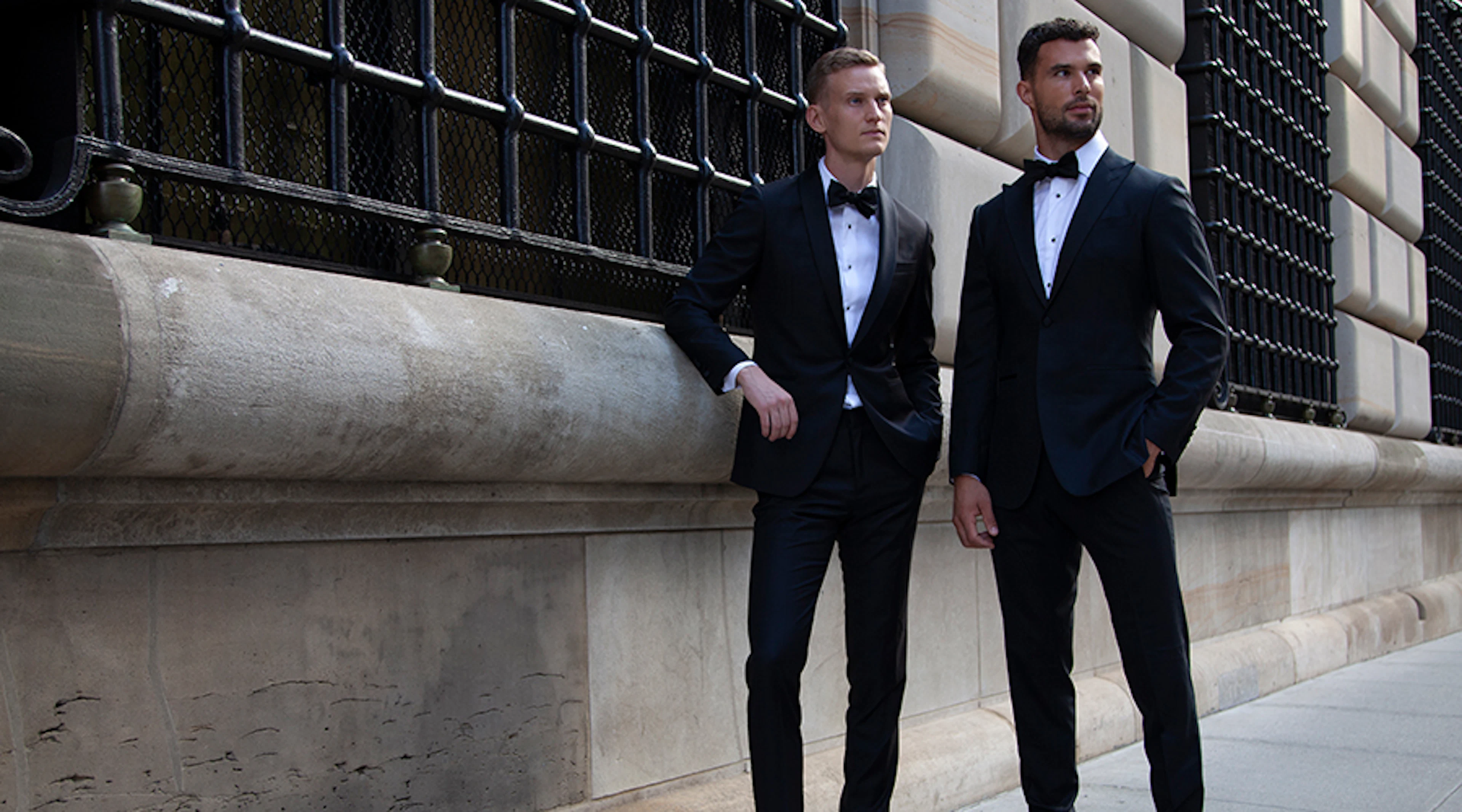
If you’re confused about the difference between a tux and a nice suit, the main distinction is satin details on the tux. You’ll find this fabric on the lapel of the jacket, and it can also be a detail on the pockets, buttons, and pant legs.
Just like custom suits are the best in terms of fit, form, and style, you’ll want a custom tux to complement your wardrobe. This way, you’ll look your absolute best, show off your personal style, guarantee the best fit, and stand apart from other tuxes. With that in mind, you will need to pick all the pieces of your custom tux to maximize your personal fashion sense. All tuxes might seem the same, but they have different components and details you can choose from.
Pick Your Pieces
Some parts of a tuxedo are set in stone while others are optional.
You need the jacket and pants, along with the accessories covered in the next section. You can personalize the jacket by picking from the lapels you would be used to on a suit; shawl or peaked lapels are preferable, as the notched type isn’t formal enough for a tux. The shawl lapel without a noticeable cut or notch is popular and classy, while the peaked lapel is somewhat less formal but still looks great.
No vents are the standard when it comes to tuxedo jackets, but side vents are also acceptable.
The other features, including the buttons and pockets, tend to be standard to a tux rather than personalized. For the pants, you can pick whether they are pleated or flat-fronted. A satin stripe down each of the sides is normally standard as well.
Other than that, you get to decide whether you want the optional pieces. You could add a vest or cummerbund to go under the jacket. You can also pick a pocket square or skip one.
Accessories
To get the full look, it’s not just about the tuxedo itself. You’ll ruin the look completely if you don’t pair it with a quality white dress shirt, preferably choosing custom shirts. You also need a black bow tie—with a matching finish to the tuxedo’s satin detail—and black patent leather dress shoes. It’s also not a bad idea (but still optional) to have cufflinks and a nice watch.
You’ll be able to pick from different styles for your accessories to personalize your tux.
Start designing your custom tux and custom shirts through Enzo Custom. Feel free to stop by one of our showrooms in New York, Philadelphia, Charlotte, Washington, D.C., Chicago, or Beverly Hills, California. You can also create a custom suit through our website.
Begin With a Private Appointment
Explore cloth, fit, and occasion with an Enzo Custom clothier. Reserve a private appointment at your nearest showroom.
No obligation · By appointment
More from the Journal

On Cashmere: Grades, Origins, and What Quality Looks Like
Most men own a cashmere garment. Few can, on inspection, tell whether the garment they own is good cashmere or merely cashmere. The fiber has been so democratized — by the mall brands, by the e-commerce labels, by the seasonal sale racks — that the word itself has lost most of its meaning. The original meaning is recoverable. It requires a small vocabulary and a willingness to handle the cloth long enough to read it.

The Double-Breasted Suit, Considered
The double-breasted suit has spent much of the last forty years out of fashion, then quietly back in it, then out again. Each of these movements obscures a more durable fact: the silhouette is its own grammar, and a man who understands its rules does not need to track its returns. The double-breasted is the most architecturally distinct cut in a man’s wardrobe — and, in its proper form, the most quietly authoritative.

The Black Suit: Considered Beyond Funerals
The black suit has a complicated reputation in contemporary menswear. For decades, it was the suit a man owned for funerals — a single piece in the closet that came out only for sad occasions and was otherwise treated as too somber for ordinary wear. The recommendation in most menswear writing is to skip the black suit entirely and choose a charcoal or navy as the foundational dark suit.