Breaking Tradition Without The Belt: Styles That Work (And Some That Don't)
Just like most other fashion accessories, belts also serve both a functional and stylistic purpose, adding extra trouser support Along with a visual complement to the rest of a person's ensemble. Although there are several pros and cons of each type of support system, choosing belts over suspenders and vice versa is always going to come down to a matter of personal preference.
You'd be hard-pressed to find anyone out and about wearing a custom suit without a matching belt these days, and this observation shouldn't really be a surprise. Just like most other fashion accessories, belts also serve both a functional and stylistic purpose, adding extra trouser support along with a visual complement to the rest of a person's ensemble. Even though suspenders serve the exact same purpose and can be adjusted in a very similar way to belts, they're a little more difficult to put on and in some cases need to be measured more carefully in order to fit properly.
While belts provide extra trouser support, they don't do so at the expense of ruffling up your shirt or restricting your movements as suspenders are sometimes known to do. By wearing a suit with a belt, you may even find that your suit jacket is able to show off a cleaner definition without suspenders creating those unnecessary bumps in your shoulder line. Although there are several pros and cons of each type of support system, choosing belts over suspenders and vice versa is always going to come down to a matter of personal preference. At least in North America, belts have always been the more dominant accessory out of the two going back at least 50 years.
As the modern suit evolved, suspenders at first were considered more of an undergarment and needed to be concealed. Waistcoats, or vests as they are more commonly known, were very good at making sure suspenders stayed out of sight and out of mind. Belts, on the other hand, were originally designed as a form of outerwear and could provide support while simultaneously being on full display. As a result, belts began to dominate the American fashion landscape.
In spite of the belt's dominance in terms of popularity, sometimes there are instances when formal wear is better suited without one. So long as personal tastes and fashion trends continue to evolve, there will always be a place for particular styles that favor suspenders or sometimes no extra support at all. Depending on various aspects of one's ensemble such as suit style, trouser length, time of day, and venue, breaking tradition without the belt can elevate your personal style to the next level. In this piece, we'll tell you how to go about it.
--General Style Guidelines--
Within the fashion community, there is much debate over whether or not one should always wear a belt if your pants have belt loops on them. Common sense would dictate that you should in fact wear a belt when that specific condition is met. In the realm of formal wear, combined experience tells us that any deviations from this unspoken rule are at least frowned upon. However, it's not uncommon for men to wear suspenders in place of a belt, even if their trousers have belt loops. While there are some men who would never recommend doing this, if you're insistent upon it then it's probably best to leave wearing suspenders with looped trousers for more casual engagements. Granted, it's not as much of a fashion faux pas as wearing gym shoes with a tuxedo, but having belt loops visible without a belt can throw off the symmetry of your ensemble and draw attention to something that will for sure look out of place. The key to wearing anything effectively is wearing it with confidence, but in the case of trousers with belt loops, it's best to exercise extreme caution if you choose to forego a belt, especially in formal settings.
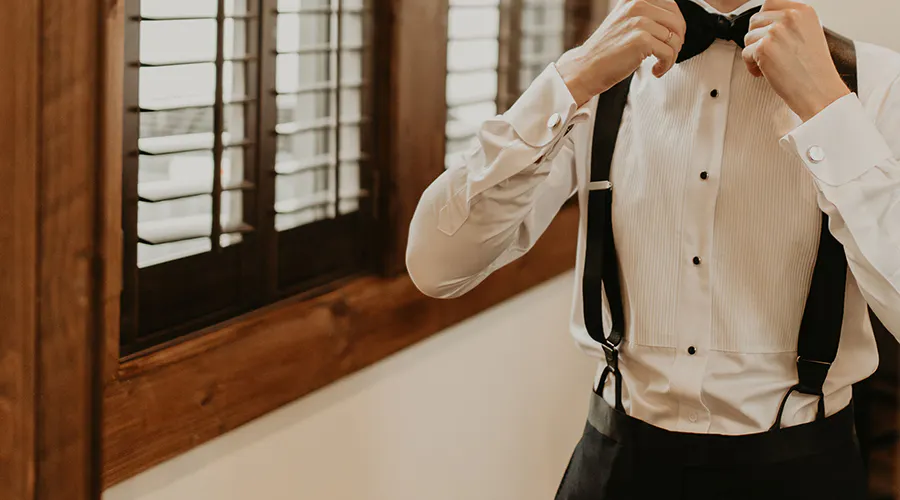
Just as there are unspoken rules for trousers with belt loops, the same applies to pants without them. With no belt loops present, gentlemen must opt for another mechanism to provide extra trouser support when it is needed. One of the most popular and effective ways to do this is through the use of suspenders, or braces as they are also known. Many suit pants available on the market today come with buttons on the inside of the waist specifically designed to accommodate suspenders. In the context of formal wear, it's pretty much standard to use suspenders with button fasteners rather than suspenders with clips for both functional and stylistic reasons. Suspenders with buttons are much less prone to coming undone accidentally, and since they fasten to the inside of the pants, the attachment remains away from plain view, rendering a more seamless overall appearance. But suspenders aren't the only option.
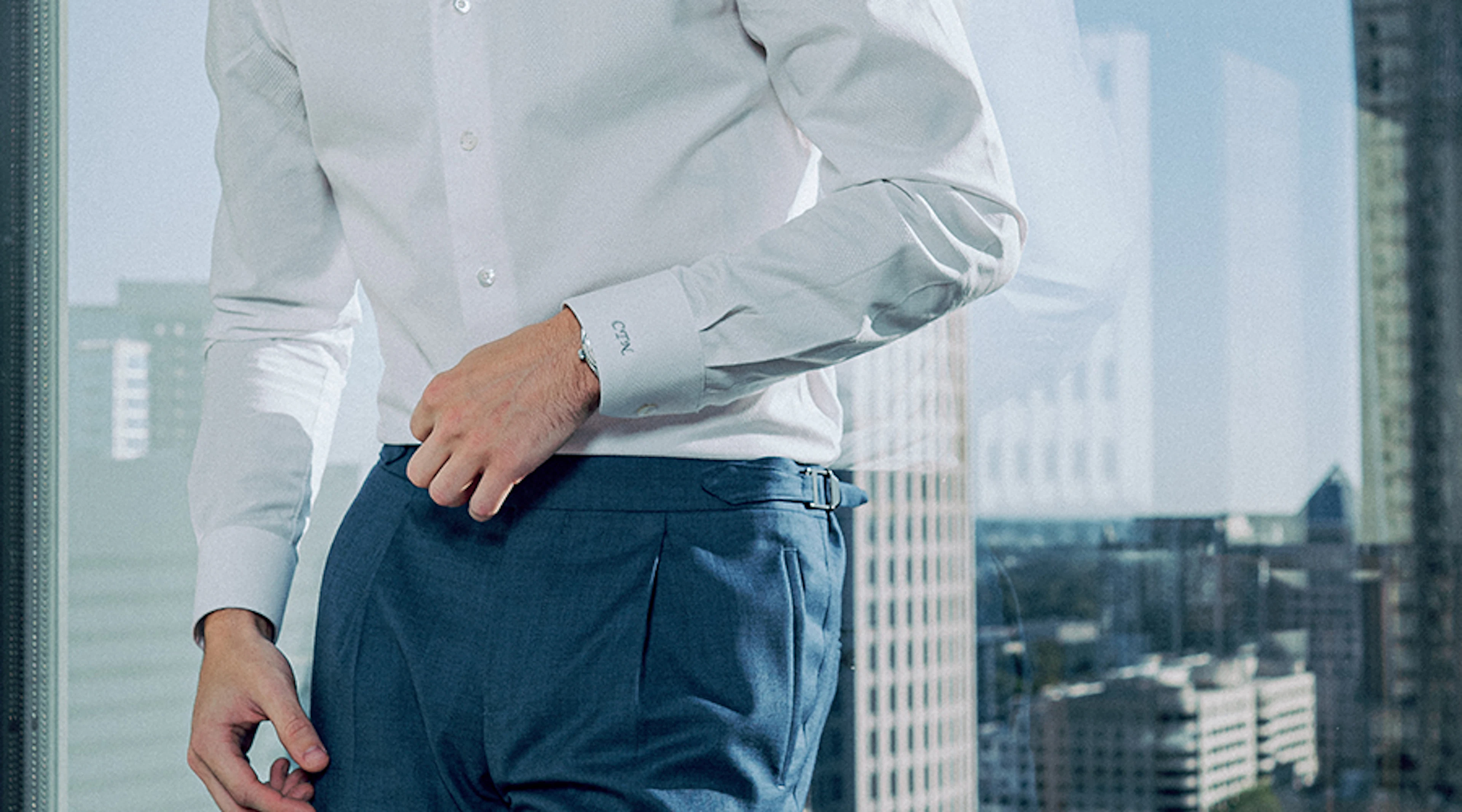
Some suit pants can be tailored with adjustable straps hidden inside the waistband, and these pants can be worn without the use of any other support type at all. Many tuxedo pants also come with this feature since they're always worn without a belt.
As far as style tips go, one key thing to remember is that you should never wear a belt with pants that don't have belt loops. Doing so is a major fashion faux pas that will certainly turn some heads. You also risk that your belt will fall down without anything to keep it elevated in place.
Wearing looped pants with suspenders is more of a judgment call as we said before. Even so, doing this is probably best reserved for more casual affairs that don't require a jacket and tie, but this guideline is certainly more flexible than some other ones.
One that's not so flexible, however, is wearing belts and suspenders at the same time. This should never be done in any setting, formal or otherwise. Wearing suspenders while wearing a belt is not only redundant but also outré, and not in a way that's particularly flattering as it will almost always convey a lack of fashion sense.
Regardless of what your preference is when it comes to suspenders, belts, adjustable straps, or solely relying on proper measurements, it's always best to opt for something that will emphasize stylistic symmetry for any given ensemble, and this might vary considerably depending on what you're wearing on any given day. While most suits can be worn safely with a belt, others can sometimes look better without one.
--Best Suits To Wear Without A Belt--
Off-the-rack suits offered at department stores and other large retailers can be convenient options when you're in a bind and need formal wear on short notice. However, what you gain in time efficiency is lost to style customization, even if they offer limited tailoring services. Since most of these suits come with pants prefabricated with belt loops, it becomes harder to make your own choices in terms of the trouser support you prefer. If you buy a custom suit, however, you can specify how it is manufactured before they even tailor your measurements and make adjustments as needed. For gentlemen who prefer suspenders, custom suits give them the ability to forego belt loops to provide a more seamless and symmetrical style that otherwise would be unavailable. With custom suits, you can even add adjustable straps to the waistband or simply rely on proper and precise measurements to give your trousers the support they need. In the latter case, however, we would still recommend inside suspender buttons as a backup measure in the event that you need extra trouser support in the future.
The overall style of a suit and the way it looks on a particular person will have a lot of sway in determining whether it can be worn without a belt or should stay within the bounds of a more traditional style. Italian-style suits are generally tailored in a certain way that's more favorable to wearing one sans belt or even without suspenders, providing a sleek, modern, and seamless look that's harder to pull off with its American- or British-style counterparts. Since Italian suits are made with a higher waistline and provide more of an effortless transition between the top and bottom portion of the outfit, there's less of a stylistic need for a belt to delineate the midsection of the ensemble. Now that we've established that suits can sometimes be worn without a belt, there are other instances where a belt is still beneficial.
--When You Should Wear A Belt--
If you plan on leaving your jacket at home for those occasions that don't require one, it's probably best to wear a belt to provide a semblance of balance between your shirt and your trousers. While you can also do this with suspenders in the event your pants don't have belt loops, semi-formal settings will generally favor belts in lieu of braces, as the latter are associated with a more formal mode of dress.
A good rule of thumb to remember for less formal occasions or business casual office attire is that you should always wear a belt if you're required or expected to tuck in your shirt. Empty belt loops can stand out quite loudly especially when there's no jacket or free-flowing shirt bottom to conceal them.
Style considerations aside, it's always going to be advantageous to wear a belt when you actually need the extra support, regardless of how formal or informal a venue may be. If your pants don't come with suspender buttons or adjustable straps in the waistline, there's not really much of a choice anyway. So long as your belt matches your shoes and doesn't take too much away from your ensemble, you can look just as stylish with a belt as you could have without one.
The most important thing to remember is that going without a belt should be determined by how it would look on a given outfit rather than as a set rule for everything in your wardrobe, so if you find yourself in a position that requires dressing up on a regular basis, it's good to have as many options as you can at your disposal.
No matter your preference, Enzo Custom can design and tailor suits exactly to your liking. Our expert clothiers can give you additional guidance when it comes to whether your style sensibilities and body type are better complemented by belts, suspenders, or simply relying on precise measurements for support. To get started, stop into one of our showrooms today, or if you feel more comfortable at home you can schedule a free consultation via videoconference.
Begin With a Private Appointment
Explore cloth, fit, and occasion with an Enzo Custom clothier. Reserve a private appointment at your nearest showroom.
No obligation · By appointment
More from the Journal

On Cashmere: Grades, Origins, and What Quality Looks Like
Most men own a cashmere garment. Few can, on inspection, tell whether the garment they own is good cashmere or merely cashmere. The fiber has been so democratized — by the mall brands, by the e-commerce labels, by the seasonal sale racks — that the word itself has lost most of its meaning. The original meaning is recoverable. It requires a small vocabulary and a willingness to handle the cloth long enough to read it.

The Double-Breasted Suit, Considered
The double-breasted suit has spent much of the last forty years out of fashion, then quietly back in it, then out again. Each of these movements obscures a more durable fact: the silhouette is its own grammar, and a man who understands its rules does not need to track its returns. The double-breasted is the most architecturally distinct cut in a man’s wardrobe — and, in its proper form, the most quietly authoritative.

The Black Suit: Considered Beyond Funerals
The black suit has a complicated reputation in contemporary menswear. For decades, it was the suit a man owned for funerals — a single piece in the closet that came out only for sad occasions and was otherwise treated as too somber for ordinary wear. The recommendation in most menswear writing is to skip the black suit entirely and choose a charcoal or navy as the foundational dark suit.