Custom vs Made-to-Measure Suits: The Structural Difference
Why one is built around you, and the other is adjusted to fit.
What Is the Difference?
Made-to-measure adjusts an existing template. Custom tailoring drafts an individual pattern from scratch — fitted, refined, and retained for every future commission.
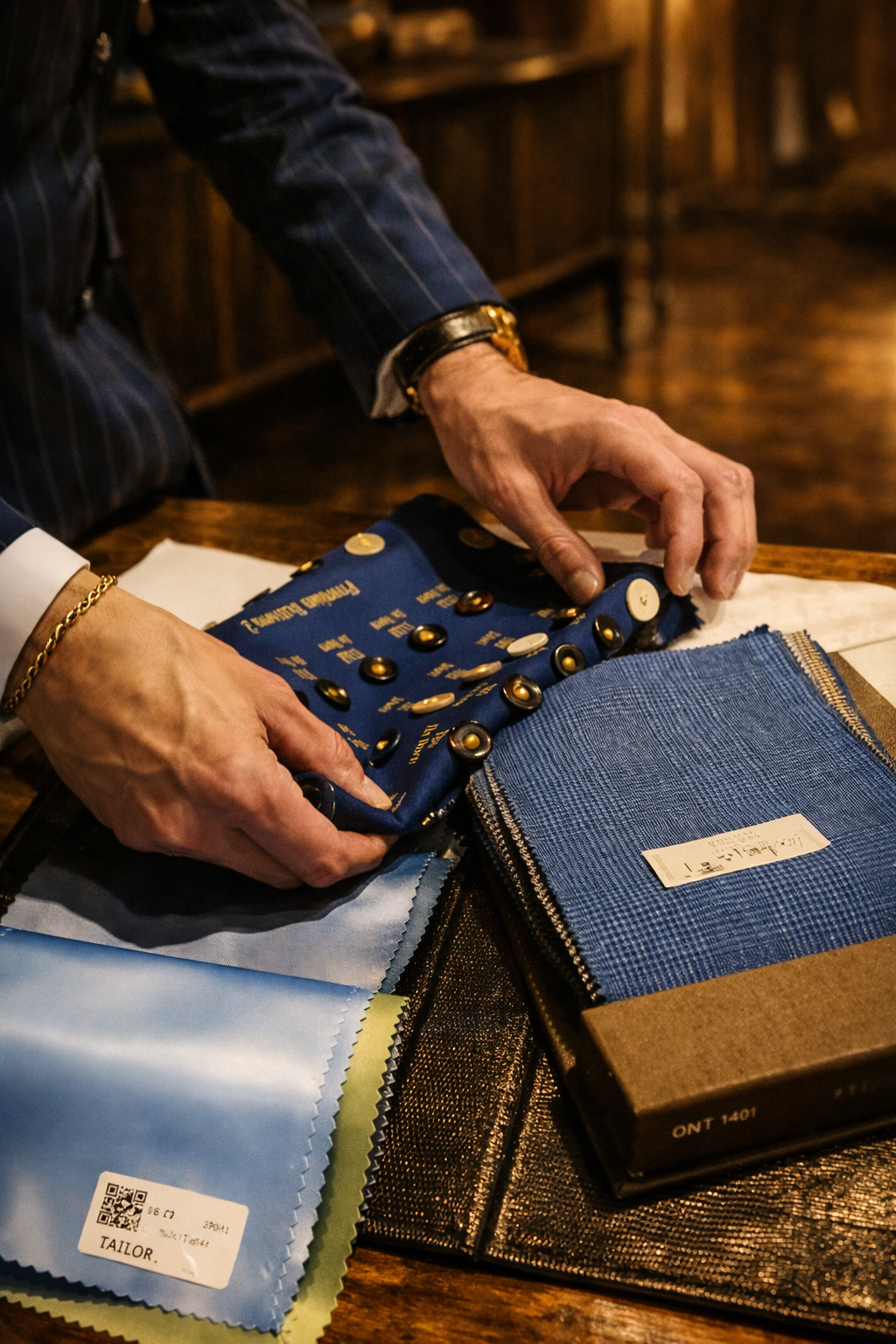
Most men have never worn a garment built from their own pattern.
The difference begins before the cloth is selected.
Enzo Custom drafts individual patterns across private showrooms in the United States, producing garments defined by structure rather than approximation.
The difference between custom and made-to-measure tailoring is defined by one structural factor: pattern origin.
In modern tailoring, the terms are often used interchangeably. Structurally, they are not equivalent.
Made-to-Measure
Made-to-measure begins with a pre-existing factory block pattern.
A base model is selected and adjusted within preset tolerances—length, suppression, and circumference. These refinements improve proportion, but they do not redefine the garment.
Core geometry remains inherited. Armhole height, shoulder pitch, chest balance, and sleeve rotation are fixed.
Made-to-measure modifies a template. Custom tailoring originates a pattern.
Custom Tailoring
Custom tailoring begins with an individual pattern drafted from scratch.
No base model. No preset tolerance. No template.
The pattern reflects shoulder slope, posture, balance, and asymmetry as they exist in the individual.
The garment is built around the wearer before cloth is cut.
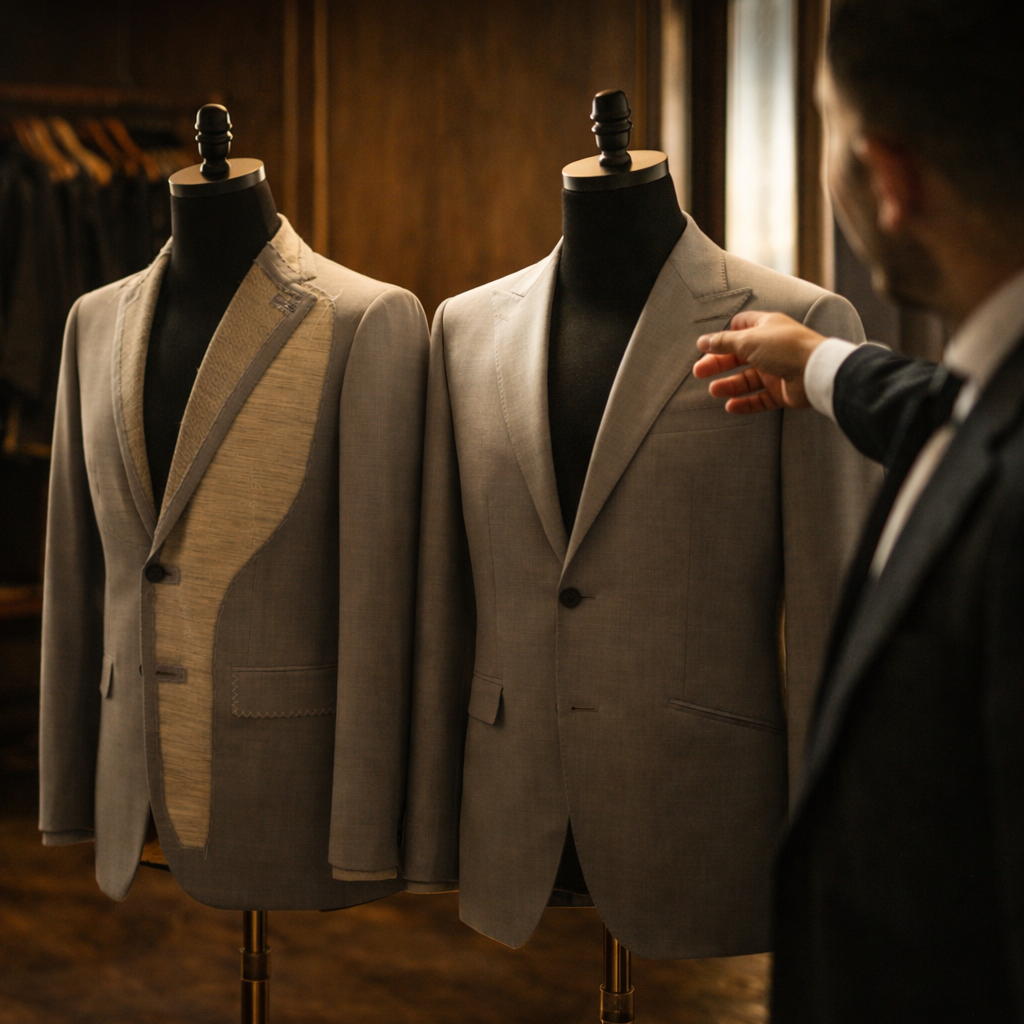
Pattern Origin
The defining difference is not visible at first glance. It exists in the pattern.
Made-to-measure inherits structure. Custom defines it.
Fit and Posture
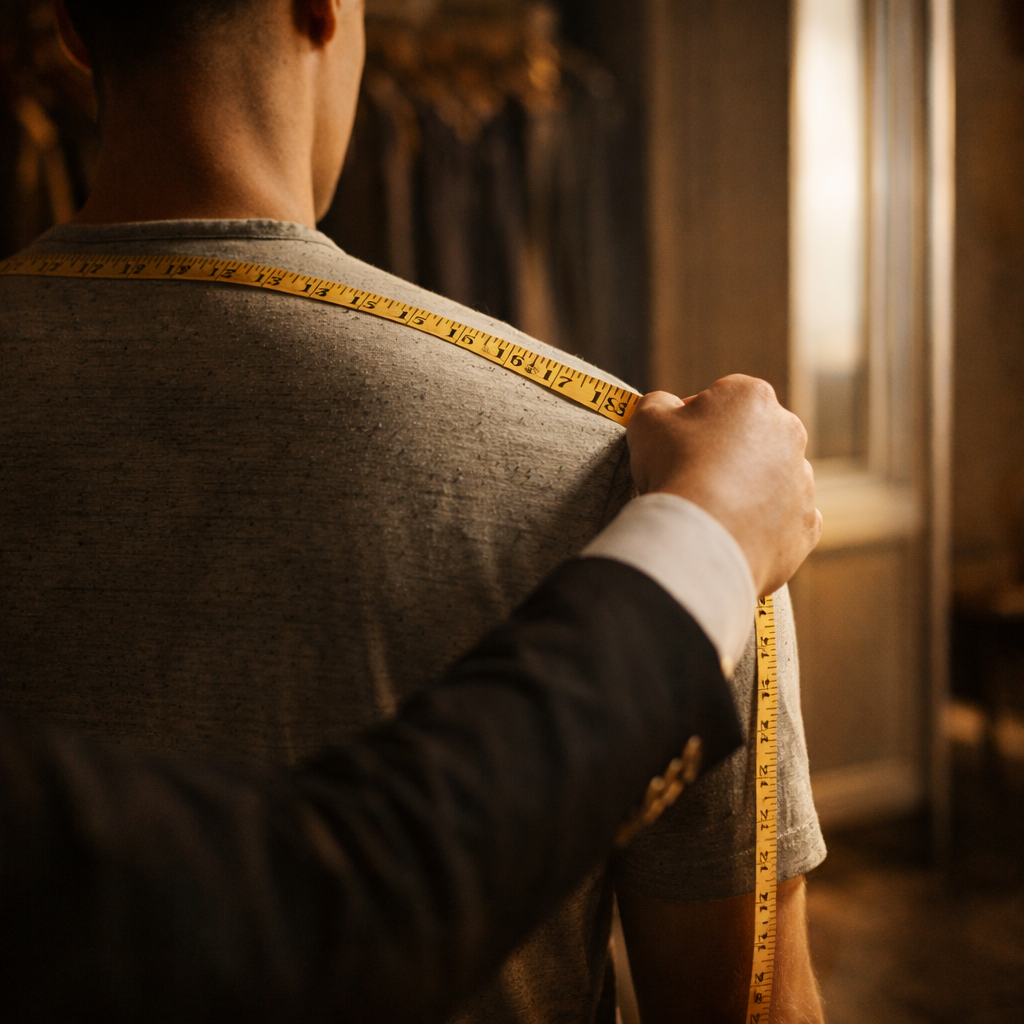
Fit is not measurement alone. It is the correction of posture.
Most individuals do not stand symmetrically. Balance shifts through the shoulders, chest, and stance.
Made-to-measure accommodates measurement. Custom tailoring resolves imbalance at the source.
The garment settles because it was drafted for the body itself.
Structure and Construction
A jacket's structure depends entirely on the pattern it supports.
Made-to-measure applies structure to a fixed framework. Custom tailoring calibrates structure to the individual.
This includes floating canvas construction.
Over time, this distinction becomes permanent.
Floating Canvas Construction - Architectural Standard and Seasonal Calibration
Floating canvas construction remains the architectural benchmark in high-level tailoring.
A floating canvas jacket suspends a structured horsehair-based canvas between cloth layers, allowing:
- Natural drape
- Controlled lapel roll
- Breathability
- Long-term structural memory
- Chest expansion flexibility
- Shape retention over time
At Enzo Custom, full floating canvas construction is our architectural standard.
For lightweight summer suits, high-twist travel fabrics, or ultra-breathable garments, we may recommend:
- A lighter-weight floating canvas build
- A semi-floating canvas structure
- Reduced chest density for enhanced airflow
These are structural calibrations - not shortcuts.
Whether full canvas or seasonal variant, internal architecture is drafted around the individual pattern - never inserted into a factory block.
Structure remains intentional.
The Internal Architecture of an Enzo Custom Jacket
Every Enzo Custom jacket is constructed with a floating canvas-based internal architecture calibrated to the individual pattern and chosen fabric.
Our structural builds may include:
- Full floating horsehair-wool-cotton canvas
- Lightweight floating canvas for summer fabrics
- Semi-floating canvas for ultra-light garments
- Graduated chest density calibrated to cloth weight
- Hand-padded lapels
- Dedicated shoulder canvas
- Individually aligned arm pitch
- Sleeve head shaping specific to shoulder slope
- Bridal tape reinforcement
- Under-collar felt stabilization
- Multi-stage pressing and structural settling
Material informs structure. Structure informs drape. Drape informs presence.
Fabric Integration
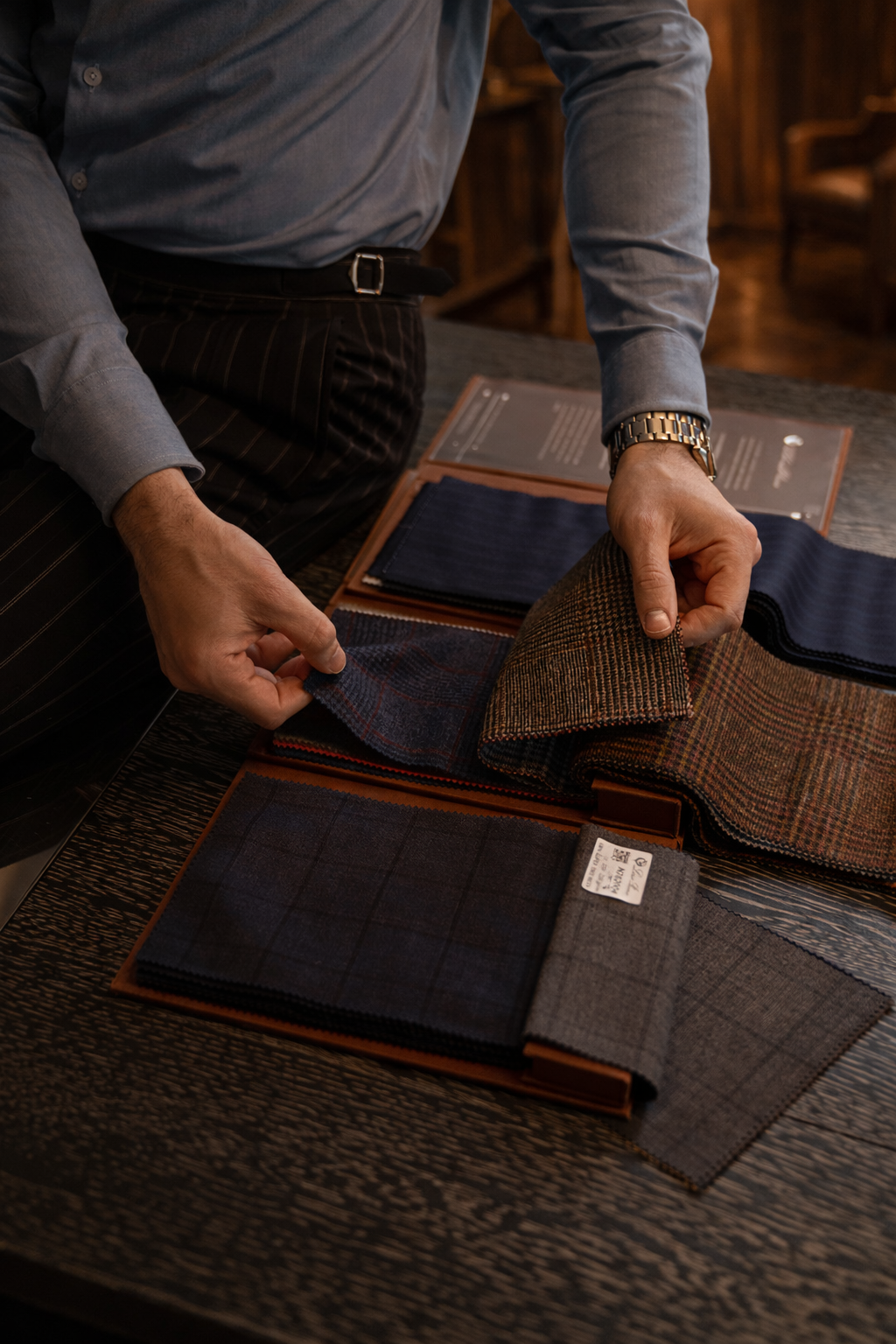
Cloth is selected before construction—and informs how the garment is built.
Enzo Custom offers over 10,000 fabrics sourced from the mills of Biella, Huddersfield, and Roubaix, including Loro Piana, Ermenegildo Zegna, Dormeuil, and Scabal.
Structure adapts to fabric—not the reverse.
Structural Comparison
Refinement Through Fittings
Precision through fittings.
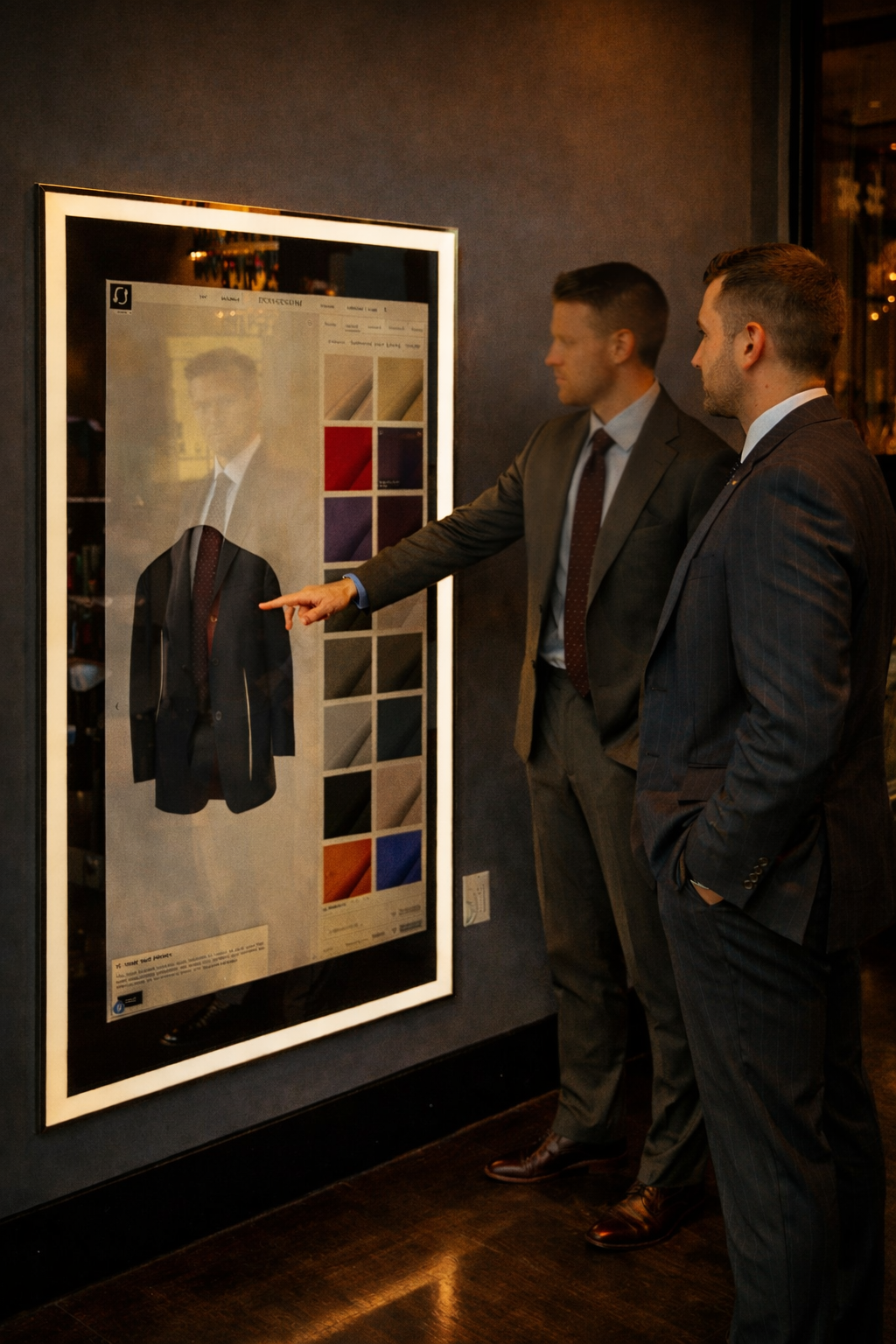
A custom garment is refined through controlled fittings until it settles without resistance.
Position Within Tailoring
Pattern-first tailoring.
Custom tailoring and bespoke share the same structural principle: pattern-first construction.
Final Summary
The structural takeaway.
The difference is measured in millimeters—and understood over time.
Experience True Custom Tailoring
BY APPOINTMENT ONLY · NEW YORK · BOSTON · CHICAGO · WASHINGTON, D.C.
Frequently Asked Questions
Is custom the same as bespoke?
Custom tailoring and bespoke both originate from individual patterns. Bespoke traditionally involves additional fittings and specific workshop methods.
How long does a custom suit take?
Production typically ranges from two to six weeks depending on fabric and construction.
What determines the price of a custom suit?
Cloth selection, construction, and design complexity are the primary variables.
How many fittings are required?
Most garments require one to two fittings to finalize balance and proportion.
Can posture be corrected?
Yes. Custom tailoring addresses posture at the pattern stage, allowing structural correction rather than surface adjustment.