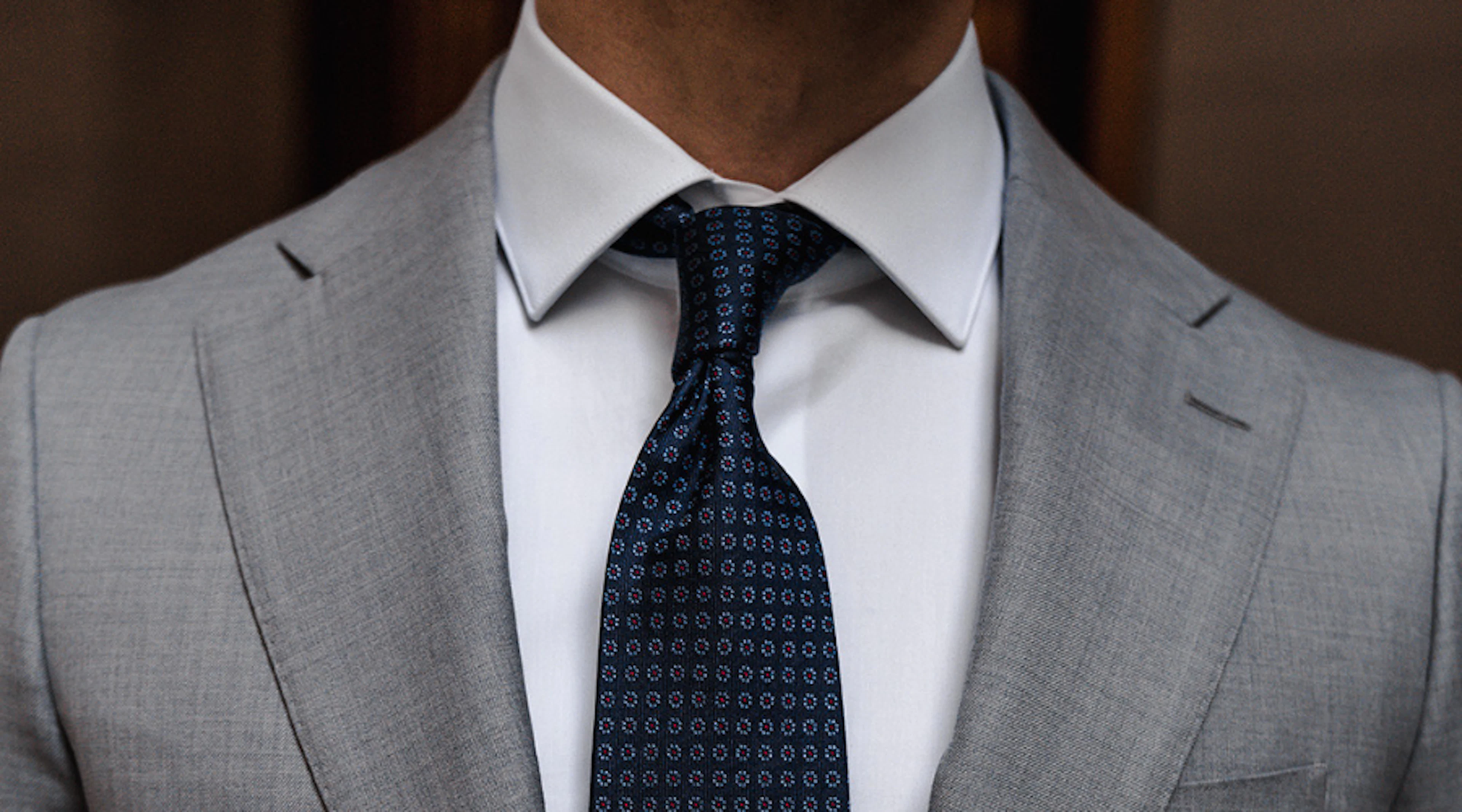
Tie Clips Are Coming Back. Here's How To Make The Most Of Them.
Throughout a good chunk of formal wear's history, tie clips have been seen as more or less an afterthought, even somewhat of an unnecessary gimmick that neither adds nor takes away from a gentleman's overall ensemble. Tie clips, in their modern form, can trace back their origins to stick pins and tie tacks that became more popular in the early 1870s. While tie clips of all forms effectively serve the same purpose, not all tie clips are the same in terms of how they function.
Throughout a good chunk of formal wear's history, tie clips have been seen as more or less an afterthought, even somewhat of an unnecessary gimmick that neither adds nor takes away from a gentleman's overall ensemble. While those who pay no mind to tie clips would be right in saying that they are technically unnecessary, they would be wrong to assume that tie clips add nothing to a gentleman's formal wear. Although a tie clip won't necessarily make or break an outfit, a tie clip can be significantly more powerful from a stylistic perspective in spite of its insignificant size. In the same vein as lapel pins and cufflinks, sometimes the smallest accessories can make a large difference in the overall presentation of a formal custom suit.
Tie clips, in their modern form, can trace back their origins to stick pins and tie tacks that became more popular in the early 1870s. Neckties of the day were very lightweight compared to the material used today, so gentlemen needed a way to prevent their ties from blowing in the wind or wrinkling as a result of too much movement. Toward the middle part of the 20th century, many businessmen started to shed their waistcoats as part of their day-to-day outfits and in turn gave way for a more convenient method of securing their neckties in place. Rather than using a stick pin to puncture through the tie to the shirt placket, a clip could simply be slid over the middle part of the tie—unobstructed by a waistcoat—and the outer part of the shirt placket to hold the tie in its correct position.
Thus the tie clip became commonplace for everyday office attire until fashion trends changed yet again. Sometime in the mid 1980s tie clips fell out of favor and by the 1990s all but disappeared into obsolescence. In the last decade or so, tie clips have been making a bit of a comeback, albeit on a smaller scale compared to the peak of their popularity. But as with many things fashion-related that wax and wane over time, what was once deemed anachronistic can become new again with the right attention to detail. Whether you're eyeballing a few new suits for your wardrobe or wanting to add a little extra flair to something you've been wearing to the office for years, tie clips can bring your personal style up a notch or two without too much effort. In this piece, we'll show you how to make the most of your tie clips as they slowly come back into the collective consciousness of formal wear fashion trends.
--A Brief Word On Types--
While tie clips of all forms effectively serve the same purpose, not all tie clips are the same in terms of how they function. Even the term itself deserves a bit of disambiguation. In general terms, a tie clip refers to anything that holds a necktie in place over a shirt placket without using tacks or pins to puncture through it. More technically, a tie clip uses a small spring mechanism that clamps down on the tie and the shirt placket. Tie bars, on the other hand, slip over the tie and the shirt placket without using a spring mechanism to hold everything in place. From the outside, tie clips and tie bars will look exactly the same, so it's no surprise why tie bars are also referred to as tie clips most of the time. To sum up the terminology, a tie bar is a form of tie clip, but not all tie clips can be classified as tie bars. It's a very subtle, almost inconsequential difference, but the distinction comes in handy if you need something to hold your tie in place that can't rely on the thickness of the tie or shirt placket alone. A tie clip, in comparison to a tie bar, will give your tie a little extra security because of its spring mechanism as opposed to a tie bar. For most general purposes, however, the terms tie clip and tie bar can be treated like they are synonymous, especially as many tie clips on the market today are of the tie bar variety.
--Functionality--
Considering where a tie clip is placed, the function it serves should be pretty obvious. The main purpose of a tie clip is to hold a necktie in place. The two biggest enemies of your necktie are always going to be wind and food. Without a tie clip, your necktie can be quite vulnerable to both.
Formal wear, whether worn indoors or outside, tends to look best when it can be left alone. Those blustery days can make this nearly impossible, especially when you have to fidget with the positioning of your tie every so often just to keep it centered. Fastening your tie to your shirt placket with a tie clip eliminates the need for constant readjusting, even when weather conditions are less than ideal.
Perhaps even more annoying than a windy day is the tendency for neckties to get in the way of enjoying a decent meal, whether you're darting out for a quick sandwich on your lunch break or showing up to a more formal engagement in the evening. Spills from coffee, soup, or salad dressing will happen from time to time, but it's best to minimize the chances of these things ending up on your formal wear. The tie, unfortunately, is the most susceptible to these mishaps. Using a tie clip to hold your necktie in a fixed position drastically reduces the chance that it will pick up any unwanted guests from your soup of the day or after-dinner coffee. It also eliminates the need to remove your tie altogether or throw it over your shoulder; the former is inconvenient while the latter can look sloppy and out of place. While stains from things like coffee or even red wine aren't too difficult to remove, prevention with a tie clip is always easier than treatment.
--Stylistic Purpose--
Just as most components of formal wear serve a functional purpose, the tie clip also provides a stylistic one. Tie clips generally measure 2 inches in length, so the stylistic effect is subtle, but important nonetheless.
When worn correctly, a tie clip should always add something to a formal ensemble. If it looks like it's taking anything away, then the tie clip is probably too long for your tie, too wide, or excessively ornate for the suit you're wearing. The key aspect to keep in mind for tie clips and other small accessories is that they should never stand out to a degree that looks out of place. Given that popular tie clips today tend to have very clean rectangular lines that don't stray away too much from minimalist subtlety, it would be difficult to go overboard in terms of style. However, our collective experience would tell us that caution shouldn't be thrown completely to the wind. While a tie clip more intricately designed could work quite well with a two-piece black or navy blue suit, it might look odd when it's paired with a herringbone jacket or a brightly colored tie. Chances are, if something ends up being wonky or awkward, you'll know it when you see it and adjust accordingly.
--When Tie Clips Work Best--
When it comes to nailing down your formal wear to exactly how you want it, comfort is half the battle. The rest, of course, is all in how it looks. As far as tie clips go, the ideal position for them is going to be a couple inches above the closing button of your jacket. For standard two-piece suits, this will be the top button on your jacket, since the bottom one should never be fastened. A tie clip that's positioned below this point will lose its intended stylistic effect, while one that rests too high can give your formal wear an undesirable loudness. The whole point of a tie clip, other than its functional purpose, is to catch one's eye but at the same time not become the focal point of your formal ensemble. Positioning it just right will allow you to achieve that.
If you choose to incorporate tie clips and tie bars into your formal attire, you should pay more close attention to the type of knot you regularly use for tying your necktie. Tie clips tend to look better when they're matched with a symmetrical knot as opposed to an asymmetrical one. A Windsor or Half-Windsor knot paired with a tie clip will give your formal attire a better visual balance than what you could achieve with a four-in-hand knot, for example.
It's also important to be aware of the color of your tie, as well as any patterns you might have on your shirt or jacket. If your tie is particularly busy or your dress shirt has pinstripes, erring on the more minimalist side of things when it comes to your tie clip will do wonders for your overall look. Consider a thin rectangular tie clip with a gold or silver patina to it, rather than something more intricate that could look out of place against a patterned shirt or a tie that leans toward the wild side of style. While there's a time and place for more intricately designed tie clips, they work best when paired with solid, more subdued color schemes.
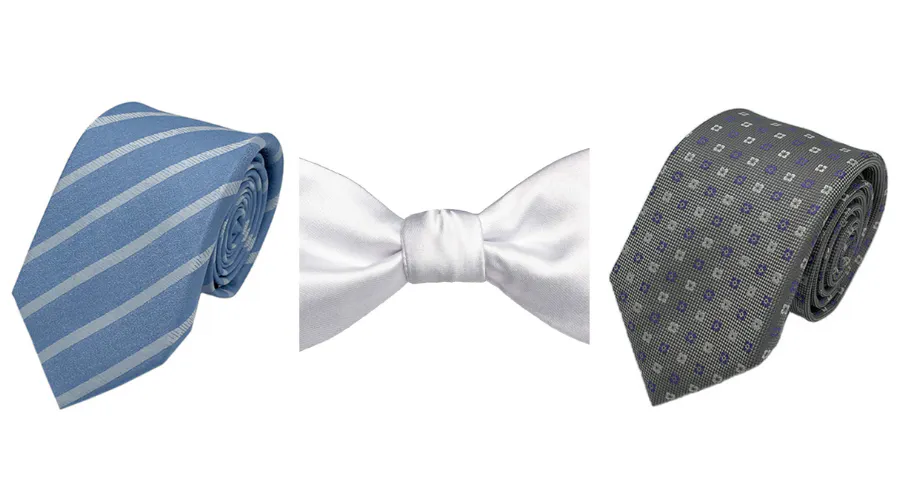
On a final note, one of the most redeeming qualities about tie clips, other than their compact size, is the versatility they provide. You shouldn't ever have to worry about feeling out of place if you choose to wear one, no matter what sort of event you may be attending. The only exception, of course, is when you're wearing a bow tie or none at all.
Begin With a Private Appointment
Explore cloth, fit, and occasion with an Enzo Custom clothier. Reserve a private appointment at your nearest showroom.
No obligation · By appointment
More from the Journal

On Cashmere: Grades, Origins, and What Quality Looks Like
Most men own a cashmere garment. Few can, on inspection, tell whether the garment they own is good cashmere or merely cashmere. The fiber has been so democratized — by the mall brands, by the e-commerce labels, by the seasonal sale racks — that the word itself has lost most of its meaning. The original meaning is recoverable. It requires a small vocabulary and a willingness to handle the cloth long enough to read it.

The Double-Breasted Suit, Considered
The double-breasted suit has spent much of the last forty years out of fashion, then quietly back in it, then out again. Each of these movements obscures a more durable fact: the silhouette is its own grammar, and a man who understands its rules does not need to track its returns. The double-breasted is the most architecturally distinct cut in a man’s wardrobe — and, in its proper form, the most quietly authoritative.

The Black Suit: Considered Beyond Funerals
The black suit has a complicated reputation in contemporary menswear. For decades, it was the suit a man owned for funerals — a single piece in the closet that came out only for sad occasions and was otherwise treated as too somber for ordinary wear. The recommendation in most menswear writing is to skip the black suit entirely and choose a charcoal or navy as the foundational dark suit.