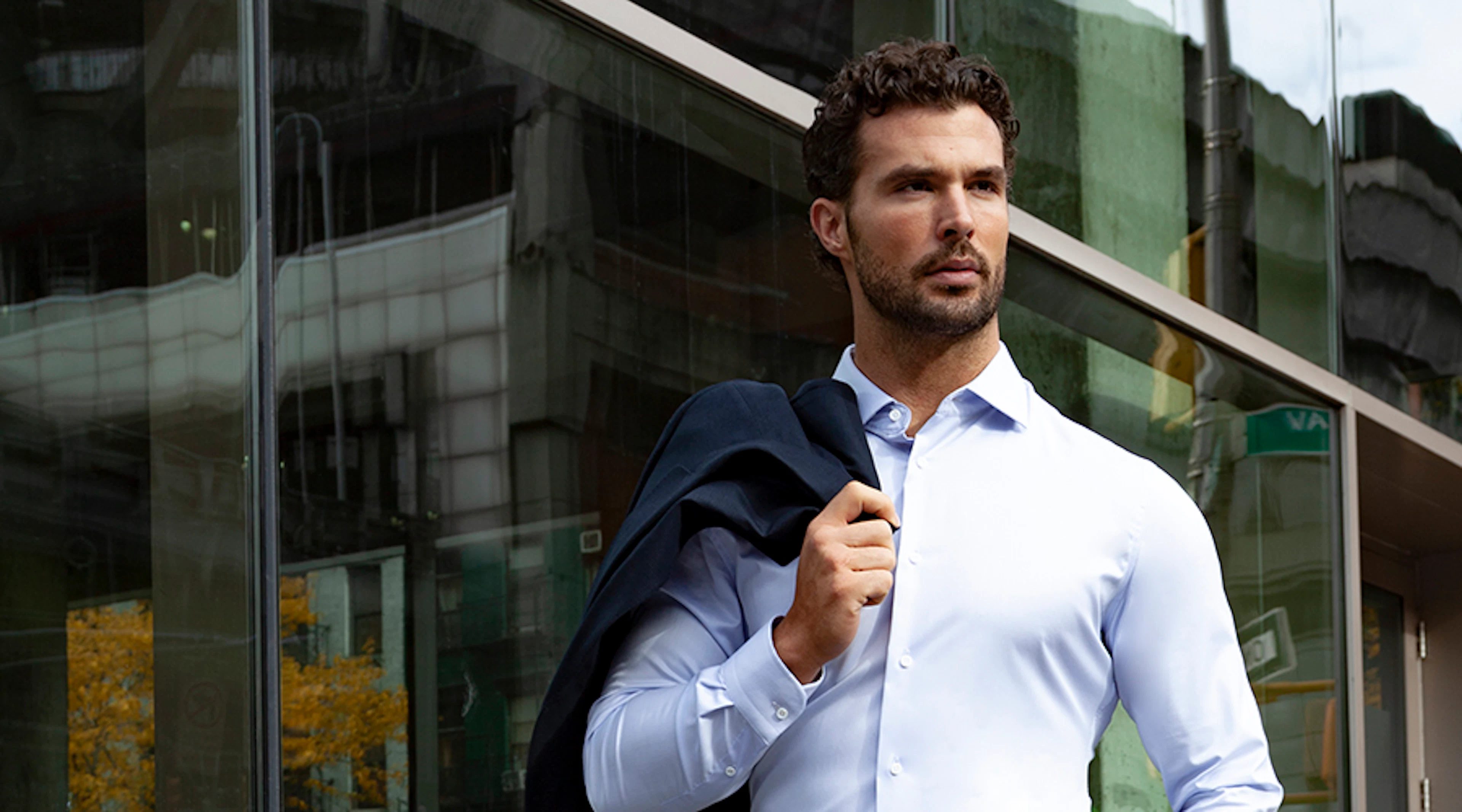
The Future of Formal and Casual Office Dress
As far as anyone can tell, the New Normal is here to stay, at least for a while. With more people working from home than ever before, dress codes in many business circles across the globe have tended to skew toward the casual side, even in cases where people are still expected to show up to a physical office. In spite of this, standards of professionalism haven't fallen by the wayside, and dressing the part for whatever industry you're working in is as important as it ever was.
As far as anyone can tell, the New Normal is here to stay, at least for a while. With more people working from home than ever before, dress codes in many business circles across the globe have tended to skew toward the casual side, even in cases where people are still expected to show up to a physical office. In spite of this, standards of professionalism haven't fallen by the wayside, and dressing the part for whatever industry you're working in is as important as it ever was.
For the better part of the 20th century, the full suit and tie was ubiquitous, and it was rare to find an office that didn't adhere to strict dress code standards. This started to change more noticeably beginning in the early 2000s, when casual office dress became more of the norm rather than the exception. Today, it's not uncommon for even large companies to forego dress codes altogether (save normal expectations of decency), and this trend is even more prevalent in relation to the recent surge of remote positions. But the full suit and tie is far away from being anachronistic, and it is likely to remain a staple of office attire for the foreseeable future and beyond.
Fashion trends can be quite fickle, and just like weather vanes, they can change directions in less time than it takes someone to change lanes on the freeway. What is old can become new again, and what is trendy one year can be tossed aside into the bargain bin to make room for something else that might last a few years or a few decades. Out of all the fashion trends we've seen over the years—from the dignified to the outrageous—the full suit and tie has, more or less, remained a constant beneath the ever-changing standards of what is considered formal and
what is not. In essence, it's always a good idea to be one step ahead of the game when something goes in and out of style.
In this article, we'll discuss the ways in which you can prepare your wardrobe for the future of both casual and formal office dress as trends tend to ebb and flow. No matter what your line of work may be, it's always good to have a broad sampling of items in your wardrobe for those unexpected twists and turns as you navigate the ups and downs of the professional landscape.
--Formal Attire--
Nothing exudes professionalism quite like the full suit, and this is true even with standards of office dress becoming more casual with time. Having a decent amount of suits on rotation is especially vital if you happen to work in finance, law, sales, or public service, as these fields have lower rates of remote work than some other industries and often require in-person meetings. One of the greatest positives about suits these days is that even in formal settings, you won't be as limited in style options as you may have been 25 or 30 years ago, where anything outside of classic black or navy blue was sometimes seen as pushing the envelope as far as dress code formalities go. Other than a handful of workplaces that enforce a strict dress code almost to the point of requiring a uniform, your formal attire can include suits with pinstripes or crosshatch patterns, colors such as grey, tan, or light blue, and variations in their structure as it relates to your individual comfort level (think British, American, Italian-style suits, etc.). If your workplace requires a more formal level of dress than others, it's always a good idea to have classic black and navy blue
in your wardrobe, but consider other colors and patterns as well, so you don't wear yourself out on the same outfit over and over again.
As far as formal attire goes with dress shirts, you'll likely have some leeway, as well. Just keep in mind that your dress shirt should pair well with the jacket and trousers you're wearing on any given day. It's best to save the loud colors and crazy patterns for days where you might forego your jacket, as you want to complement the colors in your suit, not detract from them.
In addition to the finer points of style, if your place of work mandates a more formal standard of dress, this might cause a few minor headaches if you frequently find yourself working longer hours or your boss is a little tight with the thermostat. When picking out your dress shirts, comfort should always be a priority, and this is where the material of the shirt can be just as important—if not more so—than the styles and colors you ultimately settle on. No matter how hot or cold the inside of your building is, wool and wool/cotton blends are always going to be your best bet when it comes to everyday comfort. Linen can also do wonders for your comfort level in the summer months. Just be wary of any shirts made from synthetics like polyester; while the material itself is highly durable, it doesn't breathe very well. Whatever you choose, make sure that you yourself will be comfortable in it for an entire day's work. Boosting your personal comfort level has the potential to boost your overall mood and productivity, as well.
Vests tend to be less common at the office these days, but they've seen a slight surge in popularity in the context of formal events outside of the workplace. If you like how a vest looks on you, don't feel shy about wearing it to work. But just as
you would with dress shirts, make sure it's something comfortable that won't impede your movement or ability to breathe.
In formal settings, ties will always give you the most leeway in terms of style. Even something that's loud or intricate can provide a nice accent to your overall outfit rather than taking away from it, since it's only a small part of your entire ensemble. They also hardly take up any room at all as far as closet space goes, so even if you're stretched on storage, a hundred ties can take up less room than two overcoats. The more ties you have in your rotation, the better off you'll be. At the very least you can give the appearance that you're wearing a different outfit, even if you have to don the same suit more than once in a given week.
As winter is fast approaching and cold weather is already in full swing across much of the country, scarves are yet another great way to accessorize your formal along with your casual office attire. Just as it is with ties, the style possibilities are nearly endless. Since facemasks are now commonplace, scarves also give you the added benefit of covering them up with something a little more stylish. As opposed to an overcoat, sweater, or vest, scarves allow you to regulate your body temperature with more control and versatility. For those particularly frigid days, you can wrap it around your entire neck and the lower part of your face. If it's not too blustery outside, simply keep it loose around the back of your neck and over your jacket lapels.
--Business Casual--
Dressing down is definitely in, and has been for quite some time now. However, just because your workplace might not require formal dress doesn't mean
you have to forego the finer points of style altogether. For most people, business casual simply means wearing a dress shirt and a pair of slacks without the jacket and tie, but this varies by region as well as profession. In spite of the rise in more lenient dress codes, especially with the increase in remote work these days, the standards for business casual appear that they will likely remain the same as they've always been. For some, business casual might even encompass wearing a polo shirt and jeans, but if you're unsure of your office's unspoken dress code, it's wise not to push the limits, at least not at first. As with most things fashion-related, it's often a judgment call.
If you decide to go the business casual route, one key thing to keep in mind above all else is that your belt should at the very least match your shoes, i.e. brown with brown, black with black, grey with grey, etc. While the rule isn't ironclad and the fashion police won't take you downtown for violating it, your overall style will be better served with this subtle matching symmetry. By following this one simple guideline, you'll be able to elevate your casual look to a level of sophistication on par with a more formal ensemble with hardly any effort at all.
While the necktie is normally associated with formal wear, it can also be a way to jazz up your business casual attire. The benefit of wearing one without a full suit is that you'll have a bit more wiggle room as far as style, color, and patterns go. At the end of the day, donning a tie or foregoing it altogether is up to your own individual discretion.
One last thing to be mindful of in the business casual realm is your socks. If they're appropriate for formal attire, they'll work just as well with more casual dress codes. Just avoid wearing socks, especially white ones, that you would normally wear to the gym or with a pair of jeans on a leisurely night out. Another downside is that your feet might even get a little uncomfortable, given the thicker material used for everyday pairs.
Here at Enzo Custom, we understand the importance of keeping a versatile wardrobe to maximize your style options in both professional and personal worlds, so going from formal to casual—and everything in between—is quick and painless. Whether your personal style leans toward the formal or casual side of things, Enzo Custom has got you covered going forward. Stop into one of our showrooms today to get fitted during your private appointment, or if you don't feel like venturing out, consider scheduling a meeting with one of our expert clothiers via videoconference.
Begin With a Private Appointment
Explore cloth, fit, and occasion with an Enzo Custom clothier. Reserve a private appointment at your nearest showroom.
No obligation · By appointment
More from the Journal

On Cashmere: Grades, Origins, and What Quality Looks Like
Most men own a cashmere garment. Few can, on inspection, tell whether the garment they own is good cashmere or merely cashmere. The fiber has been so democratized — by the mall brands, by the e-commerce labels, by the seasonal sale racks — that the word itself has lost most of its meaning. The original meaning is recoverable. It requires a small vocabulary and a willingness to handle the cloth long enough to read it.

The Double-Breasted Suit, Considered
The double-breasted suit has spent much of the last forty years out of fashion, then quietly back in it, then out again. Each of these movements obscures a more durable fact: the silhouette is its own grammar, and a man who understands its rules does not need to track its returns. The double-breasted is the most architecturally distinct cut in a man’s wardrobe — and, in its proper form, the most quietly authoritative.

The Black Suit: Considered Beyond Funerals
The black suit has a complicated reputation in contemporary menswear. For decades, it was the suit a man owned for funerals — a single piece in the closet that came out only for sad occasions and was otherwise treated as too somber for ordinary wear. The recommendation in most menswear writing is to skip the black suit entirely and choose a charcoal or navy as the foundational dark suit.