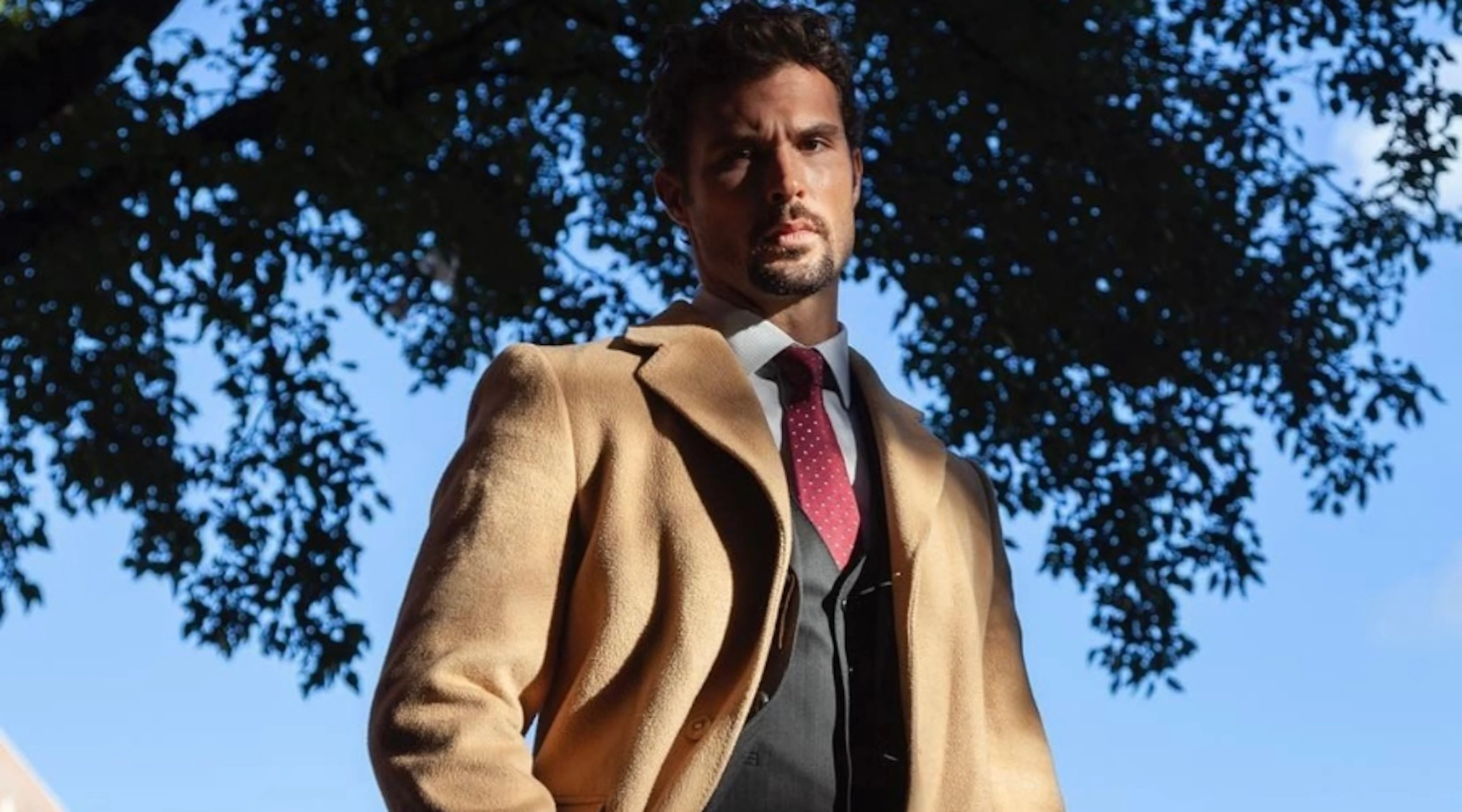
The Best Materials For Overcoats
As winter approaches, one of the greatest benefits of formal wear is that it tends to be more conducive to chilly environments. While overcoats are generally associated with modes of formal dress, this is far from exclusive. Overcoats can also come in handy for those more casual outings, even if they were designed with formal attire in mind. If you've come to familiarize yourself fairly well with formal wear, you'll know that wool has many intrinsic benefits as a material for suits and overcoats thanks to its wicking properties, helping you stay warm in the winter and comfortable even in the summer.
As winter approaches, one of the greatest benefits of formal wear is that it tends to be more conducive to chilly environments. Whether you choose to layer up or accessorize your formal ensemble with scarves and overcoats, dressing up can give you an advantage when it comes to both style and comfort, even on those days when you'd rather be sitting by the fireplace underneath a blanket at home. During the spring and summer months, your personal style combinations are somewhat limited by the number of clothing articles you can wear comfortably. When the weather gets colder, however, you'll likely need more clothing and accessories by default, which enables you to explore a wider array of style options when you get ready for the workday or venture out in the evening.
But sometimes, the drawback to those extra layers is that all of it can feel too constricting and even look bulky. Comfort is important, but not at the expense of being unable to put your arms down to your sides. Thankfully, there are plenty of ways to stay warm and do so in style, and this is where overcoats can save you a lot of trouble.
While overcoats are generally associated with modes of formal dress, this is far from exclusive. Overcoats can also come in handy for those more casual outings, even if they were designed with formal attire in mind. Still, there are some overcoats on the market specifically made for pairing with casual attire, usually indicated by the material used or the shorter length of the coat. Since not all overcoats are made or designed the same way, it's important to pay attention to the finer details when shopping for overcoats you intend to match up with your formal wear.
Perhaps the most important detail to look for when shopping for overcoats is the material. Depending on the composition and overall thickness of the fabric, the level of comfort offered by a specific jacket will vary. In milder climates, it makes more sense to go with something that has a lighter feel to it, and vice versa in areas that can be particularly harsh during the winter months. In this piece, we'll give you the rundown on the best materials for your overcoats so you can balance staying warm and comfortable with your own personal sense of style.
--Popular Fabrics--
In both casual and formal markets, you can expect to find the vast majority of overcoats in an assortment of natural materials, the most popular being wool, cashmere, cotton, and blends thereof.
If you've come to familiarize yourself fairly well with formal wear, you'll know that wool has many intrinsic benefits as a material for suits and overcoats thanks to its wicking properties, helping you stay warm in the winter and comfortable even in the summer. Not that you would need to wear an overcoat in the summer, of course, but the functional mechanics of how wool works to your advantage remain the same. By drawing moisture away from your body, wool can keep you comfortable when it's warm while at the same time keeping you insulated when it's chilly. Soft to the touch and relatively easy to maintain, it's no surprise that wool has been and likely will remain the gold-standard fabric for jackets and overcoats in the realm of formal wear.
For a slightly higher price point and some added warmth, cashmere remains another popular overcoat fabric. In a technical sense, cashmere is a distinct variety of wool derived from particular breeds of goats known for their softer and finer coats, but not all wools are considered cashmere. If you opt for a cashmere overcoat in lieu of one made from standard wool, each strand of fiber is going to be finer and thinner. Since these fibers also have to be woven more tightly together in order for the garment to keep its shape, they can trap heat more effectively than standard wool fibers that are more widely spaced apart. Cashmere also has some added perks from a style perspective, since many people prefer the softer and finer touch that cashmere wool offers.
Flexible, versatile, and durable, it isn't any wonder why cotton remains a popular fabric choice for a variety of textiles. When it comes to formal wear, you'll be more likely to find cotton in dress shirts than in jackets and overcoats, but its lower price point can be an attractive option even for the latter. The main advantage of a cotton overcoat is its lighter weight. Depending on where you live, heavy wool or cashmere overcoat may not be necessary if you're more accustomed to mild winters where all that extra insulation isn't a must. The only drawback is that cotton overcoats tend to be better suited for casual outings, but this largely rests on the overall design of the coat more so than the material itself. When you need a coat that provides a little bit of extra warmth without weighing you down, cotton provides a stylish and functional alternative.
As both functionality and style are important aspects of formal and casual wear, cotton blends can offer the best of both worlds. While this isn't always the case, the term cotton blends usually refer to a blended fabric that uses wool as its other constituent material, providing a balance of warmth, comfort, and durability suited for both formal and casual occasions. The added cotton fibers in the garment provide extra tensile strength, which can increase the longevity of the coat if you find yourself wearing outerwear frequently. Wool/cotton blends also tend to have a lower price tag than 100 percent wool fabrics, so you can save both in upfront costs and over the lifetime of the coat due to lower maintenance and a higher degree of durability. When you like the look of a wool overcoat but want some peace of mind in terms of added flexibility, cotton blends can give you a functional and stylish overcoat all in one.
With all the perks blends have to offer, they're not exclusively reserved for wool and cotton compositions. Some overcoats come available in a wool/cashmere blend, which is a solid choice for outerwear when you need to dress on the more formal side of things. While a blended wool overcoat won't be quite as soft to the touch as one made from 100 percent cashmere, it will be a little bit easier to care for over the lifetime of the coat. The tradeoff with cashmere's softness is its tendency to be more delicate than other fabrics. If it's combined with standard wool, the overcoat is likely to last a little bit longer and endure heavier use throughout the year. Compared to a standard wool coat, a cashmere blend will feel slightly warmer with those added finer strands woven into the fabric.
These days, there are many fabrics marketed as flannel, but in the context of formal wear, flannel retains its original definition of merely being a thicker fabric made of wool. While the term is more associated with casual attire and plaid shirts, the extra thickness that flannel fabric provides can be a lifesaver in cold climates. The thicker strands found in flannel shirts and coats allow more air to be trapped between them, creating an insular buffer from the outer elements that in turn retains more heat. Although flannel tends to be a little coarser than traditional wool used for custom suits and tuxedos, the tradeoff is that you'll stay more comfortable when the weather isn't exactly favorable. The extra heat-retaining properties of flannel make it an excellent choice for overcoats and other assortments of outerwear. Whether you need that extra barrier from the cold for formal evening events or casual weekend outings, you can't really go wrong with adding a flannel overcoat to your wardrobe.

--Linings and Features--
Overcoats designed for pairings with formal wear generally use rayon and other cellulose-based semi-synthetic fabrics for the inner lining, the same materials used for linings found in most suit jackets, tuxedos, and blazers. Durable, cost-effective, and comfortable, standard rayon jacket liners are sufficient to provide structural integrity to your outerwear and prevent any unnecessary friction that could degrade the outer fabric of an overcoat over time.
Depending on your personal preferences, you may want an overcoat that provides a little extra warmth. While less common in the formal realm, some overcoats available on the market today can be designed with inner fleece liners. Fleece, while a fully synthetic material derived from polyester, has many of the same benefits that wool offers but at a much lighter weight. As a result, a lighter overcoat with a fleece liner may end up feeling warmer than a heavier overcoat lined with rayon or other cellulose-based fabrics.
While the added warmth from an overcoat can be a huge benefit in cold climates, sometimes protecting your formal wear from the elements is a higher priority than comfort alone. Depending on the manufacturer, some overcoats can dually function as raincoats in order to keep your suits and dress shirts protected from inclement weather. Here at Enzo Custom, our unstructured jackets can be customized to serve this purpose, providing inner comfort along with a protective outer shell.
No matter what you need to add to your wardrobe for the upcoming fall and winter seasons, Enzo Custom has you covered. Our expert clothiers can help you through the process of finding the right suits, jackets, overcoats, and accessories that give you all the functionality you need as well as fitting to the standards of your own personal style. When you're ready to give your wardrobe that fall and winter upgrade, feel free to stop into one of our showrooms or make an appointment with us via videoconference.
Begin With a Private Appointment
Explore cloth, fit, and occasion with an Enzo Custom clothier. Reserve a private appointment at your nearest showroom.
No obligation · By appointment
More from the Journal

On Cashmere: Grades, Origins, and What Quality Looks Like
Most men own a cashmere garment. Few can, on inspection, tell whether the garment they own is good cashmere or merely cashmere. The fiber has been so democratized — by the mall brands, by the e-commerce labels, by the seasonal sale racks — that the word itself has lost most of its meaning. The original meaning is recoverable. It requires a small vocabulary and a willingness to handle the cloth long enough to read it.

The Double-Breasted Suit, Considered
The double-breasted suit has spent much of the last forty years out of fashion, then quietly back in it, then out again. Each of these movements obscures a more durable fact: the silhouette is its own grammar, and a man who understands its rules does not need to track its returns. The double-breasted is the most architecturally distinct cut in a man’s wardrobe — and, in its proper form, the most quietly authoritative.

The Black Suit: Considered Beyond Funerals
The black suit has a complicated reputation in contemporary menswear. For decades, it was the suit a man owned for funerals — a single piece in the closet that came out only for sad occasions and was otherwise treated as too somber for ordinary wear. The recommendation in most menswear writing is to skip the black suit entirely and choose a charcoal or navy as the foundational dark suit.