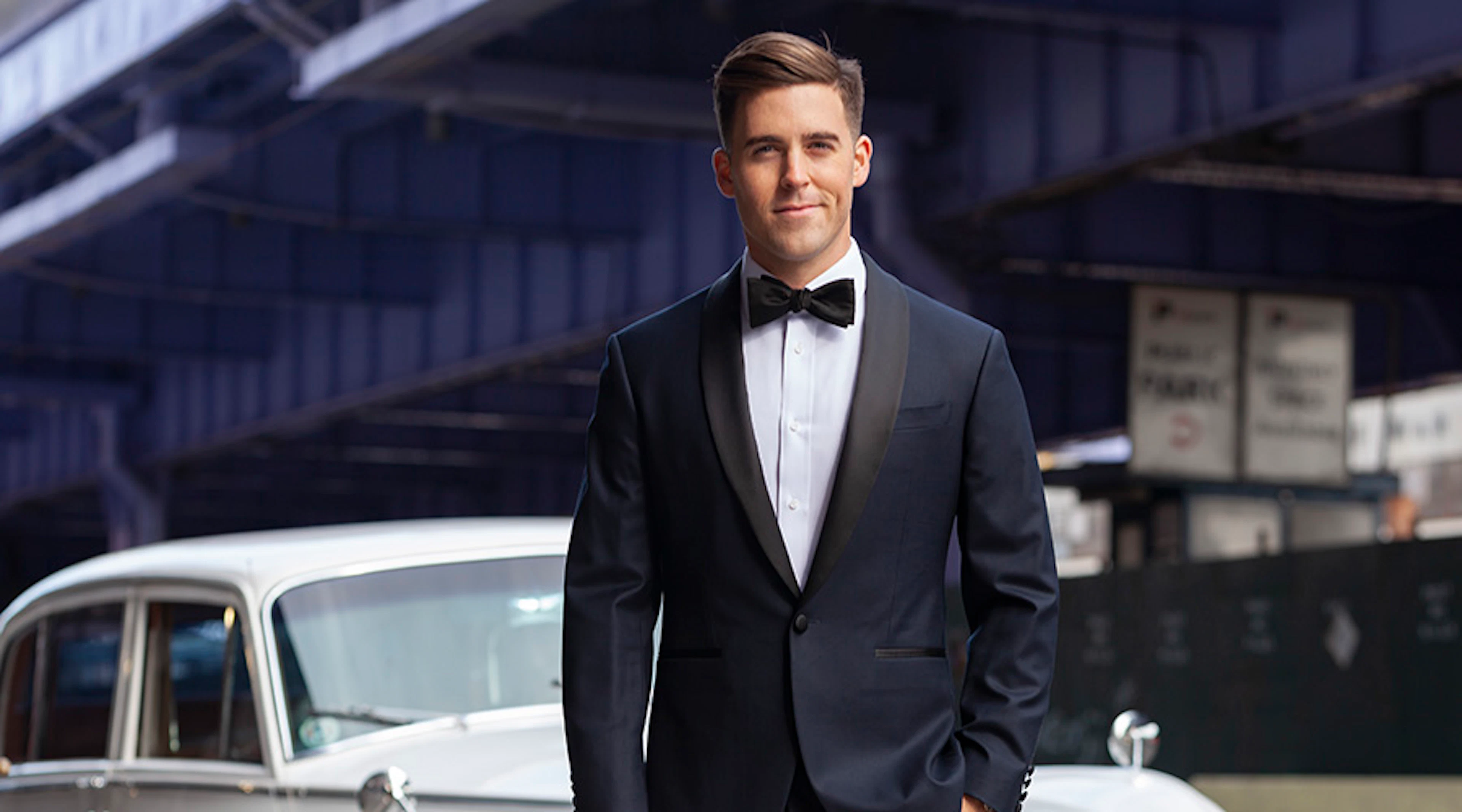
Revisiting Everything Black Tie For Upcoming Proms, Weddings, and Awards Ceremonies
Events that were postponed or canceled are slowly but surely being revived as everyone navigates and adjusts to proper etiquette and physical distancing rules going forward. While some of us aren't complaining about being stuck inside, the upcoming spring season might be an opportune time to take a good look at your formal wear and to make sure it all still fits.
If anything at all can be said about the previous year at the very least, it's certainly been a trying one. But as our innovations virtually know no bounds, it seems that more and more people are adapting to and embracing the New Normal as a way to enhance, rather than hinder, our basic needs as social creatures of habit. Events that were postponed or canceled are slowly but surely being revived as everyone navigates and adjusts to proper etiquette and physical distancing rules going forward. While some of us aren't complaining about being stuck inside, the upcoming spring season might be an opportune time to take a good look at your formal wear and to make sure it all still fits for any upcoming ceremonies and celebrations that are finally reemerging after months of indefinite postponement.
For all practical intents and purposes, the most formal dress code you'll likely ever run into is black tie, and because of its rigid standards, not much, if anything at all, has changed about it for several decades. In years past, the black-tie dress code seemed to be on its way out for weddings, but in recent years it's been making a comeback, as many wedding hosts are attracted to the dress code's symmetry and uniformity. For weddings, this dress code rigidity can do wonders for photo opportunities, since no one, in theory, will ever seem out of place if wearing wild ties or bright neon green dresses is off the table. Regardless of how everyone feels about black-tie dress code for weddings, it looks like the trend is here to stay for now. In this article, we'll do our best to give you a refresher on everything related to black-tie attire when you're invited to—or burdened with—a
wedding that requires everyone to wear tuxedos and cocktail dresses, even if you're lost at where to begin.
--Tuxedos--
Before you even consider buying a tuxedo to keep in your wardrobe so you're prepared for those surprise swanky soirées, it's important to get the best possible measurements so your tailors will know how to best balance comfort with style considerations. Although tuxedos have a reputation for being uncomfortable, they don't have to be, and getting properly fitted will ensure a pleasant experience rather than a begrudging one. Here at Enzo Custom, the combined years of experience of our expert clothiers will render your tuxedo fitted to your liking, whether you want it contoured perfectly to your body type or allotting yourself a little more breathing room with the fabric. If you happen to be between sizes, which isn't all that uncommon, it's best to give yourself a little more length rather than less, as any future adjustments are easier when you subtract rather than add an inch or two.
In addition to the bow tie, jacket, and unique shirt placket most commonly used for the traditional tuxedo, cummerbunds, waistcoats, and suspenders are all just as equally important components of the ensemble, although not necessarily all together. Variations abound, but the classic black-tie look generally calls for a cummerbund. The main purpose of this garment is to conceal the bottom part of your shirt and to give the tuxedo its characteristic uniformity. Cummerbunds can also give your pants additional support, although its main purpose is really just a matter of style. Cummerbunds are generally worn by themselves, as wearing a
waistcoat or suspenders with them would be redundant. While you should never wear a waistcoat with a cummerbund, there may be times when you need to wear suspenders to give your trousers extra support. The only downside to this is that you'll have to keep your jacket on throughout the evening, as wearing a cummerbund with exposed suspenders is viewed as rather silly in some social circles. If you decide to add a cummerbund to your tuxedo, always make sure that the color of it matches the color of your bow tie. In the case of rigid black-tie dress codes, classic black is the best (and only) option you really need to worry about.
If cummerbunds aren't really your thing or you're concerned that they look too frilly, wearing a waistcoat (or vest) is an equally acceptable alternative, as it functionally does the same thing as a cummerbund. Wearing a waistcoat doesn't require suspenders, but if you want or need that extra trouser support, always wear the suspenders under the waistcoat. This unspoken but widely understood style rule goes back to the days when suspenders were by and large considered a form of undergarment, and while this is no longer true, wearing them below the waistcoat just looks better anyway.
In recent years, there has been an increasing trend to wear tuxedos sans cummerbund or waistcoat, and this is a great option for those looking for a sleeker, more modern twist on the traditional black-tie dress code. Wearing a tuxedo bare, as the practice is commonly referred to, is particularly good in warmer climates as it allows you to ditch any unnecessary fabric that might weigh you down on the dance floor. Just be sure to keep your jacket buttoned while you're milling about so as not to expose the bottom part of your shirt. You can achieve this look without wearing
suspenders, but we would suggest that you at least consider them, as they will give your trousers extra support. The worst thing one could do is forego them only to be burdened with adjusting your pants throughout the entire evening; in spite of the black-tie dress code's formality, the whole point of such an event is to socialize and have fun, not wrestle with your shirt and pants all night. If you go the bare route, wearing suspenders at the very least will add some stability to your overall ensemble. We can't stress this last point enough, but always make sure that your suspenders can be fastened to the inside buttons of your pants; never use suspenders that clip onto the waist, as this will look sloppy at best and inappropriate at worst.
For strictly black-tie affairs, your color choices for your tuxedo are obviously limited. But that doesn't mean your overall style has to take a backseat to make room for strict rules of formality. Your accessories can complement your black-tie attire, as a little subtlety goes a long way. Pocket squares are great for this purpose, as they are one of the few components of a black-tie outfit where you can deviate a bit from the norm. A white pocket square with a presidential flat fold is the preferred choice, but you can opt for other colors or pinstripe patterns as well. Just make sure that they aren't too bold or crazy, as this will detract attention away from, rather than complement, your black-tie ensemble.
--Bow Ties--
Perhaps the most intimidating component of black-tie attire is the bow tie. While many opt for pre-tied selections in order to save time and create a uniform look, we would recommend tying it yourself. After all, much of the bow tie's charm
comes from its slightly asymmetrical presentation. In one of our previous articles, we gave you a thorough rundown of how to tie one yourself, and quickly. By following some simple steps, it's not as difficult as the bow tie's reputation makes it out to be. So here's a brief refresher, with steps:
1) Put the tie around your neck, making sure that the ends are parallel to the ground.
2) With the left side of the tie slightly longer than the right, cross the left end over the shorter right end.
3) Pull it underneath the space between the tie and your neck.
4) Pull the end tight and throw it over your right shoulder.
5) Take the shorter end in front of you and fold it over the part of the tie that's still around your neck. Make sure to hold it in place.
6) Take the longer end resting on your shoulder and drape it over the parts that you're holding in place.
7) Take the two ends of the shorter part of the tie and fold them together over the longer end. There should now be a small hole between them.
8) Take the long end of the bow tie and push it carefully through the left side of the hole.
9) Pull the looped ends away from the center of the tie and adjust accordingly.
You may have to repeat these steps a few times before you're satisfied with your look, but once you master it, rest assured that you'll be able to tie a bow tie properly in less than a minute. With practice, it's much easier than everyone says it is.
--Black-Tie Optional--
On occasion, you may receive invitations to formal events that indicate a dress code of black-tie optional. Generally, this means that you can deviate somewhat from traditional black-tie attire, but not too much. If you choose not to wear a tuxedo, at the very least go with a full suit in traditional colors or narrow pinstripe and crosshatch patterns. While you can get away with more colorful choices for your ties, pocket squares, and cummerbunds if you're adamant about wearing a tux, anything too loud or too bright is frowned upon. When in doubt, stick with traditional black-tie fare, as certainly no one will fault you for doing so.
From all of us at Enzo Custom, we wish you a safe and healthy spring season. If your wardrobe is in need of an upgrade, feel free to contact one of our expert clothiers via videoconference to get fitted, or step into one of our showrooms and get yourself ready for your next black-tie event.
Begin With a Private Appointment
Explore cloth, fit, and occasion with an Enzo Custom clothier. Reserve a private appointment at your nearest showroom.
No obligation · By appointment
More from the Journal

On Cashmere: Grades, Origins, and What Quality Looks Like
Most men own a cashmere garment. Few can, on inspection, tell whether the garment they own is good cashmere or merely cashmere. The fiber has been so democratized — by the mall brands, by the e-commerce labels, by the seasonal sale racks — that the word itself has lost most of its meaning. The original meaning is recoverable. It requires a small vocabulary and a willingness to handle the cloth long enough to read it.

The Double-Breasted Suit, Considered
The double-breasted suit has spent much of the last forty years out of fashion, then quietly back in it, then out again. Each of these movements obscures a more durable fact: the silhouette is its own grammar, and a man who understands its rules does not need to track its returns. The double-breasted is the most architecturally distinct cut in a man’s wardrobe — and, in its proper form, the most quietly authoritative.

The Black Suit: Considered Beyond Funerals
The black suit has a complicated reputation in contemporary menswear. For decades, it was the suit a man owned for funerals — a single piece in the closet that came out only for sad occasions and was otherwise treated as too somber for ordinary wear. The recommendation in most menswear writing is to skip the black suit entirely and choose a charcoal or navy as the foundational dark suit.