Optimizing Your Professional Attire For Colder Weather
Now that winter is in full swing, it's doubtful that most of us are even thinking about venturing to the beach anywhere when the weather is sometimes a coin flip between a leisurely afternoon stroll and salting your driveway in preparation for the latest incoming ice storm. While we can't always predict the weather 100 percent of the time, we can at the very least keep our wardrobe ready for those wild temperature swings. Even with colder mercury readings outside, there are things you can do to ensure that you never have to compromise on style to stay warm.
Picture yourself, for a moment, at the beach on a perfect day. The sun is shining without a cloud in the sky, the water is a comfortable 80 degrees, and you've got the whole location to yourself as far as the eye can see. Then not a moment too soon, you understand why. Storm clouds roll in, the temperature drops, and the rain turns your elaborate sand castle into an unrecognizable muddy mess, ruining any Internet posting opportunities of your architectural creation, since your phone is still comfortably at rest in your glove box. Even a little planning ahead would have avoided this unfortunate mishap, as weather forecasts have come a long way since their introduction.
Now that winter is in full swing, it's doubtful that most of us are even thinking about venturing to the beach anywhere when the weather is sometimes a coin flip between a leisurely afternoon stroll and salting your driveway in preparation for the latest incoming ice storm. While we can't always predict the weather 100 percent of the time, we can at the very least keep our wardrobe ready for those wild temperature swings. Even with colder mercury readings outside, there are things you can do to ensure that you never have to compromise on style to stay warm.
While not all suits by themselves are designed with cold weather in mind, in this article we'll show you how to maximize your comfort level with some common (and not so common) tips and tricks when the weather tries to rain (or snow) all over your parade.
--Suit Materials--
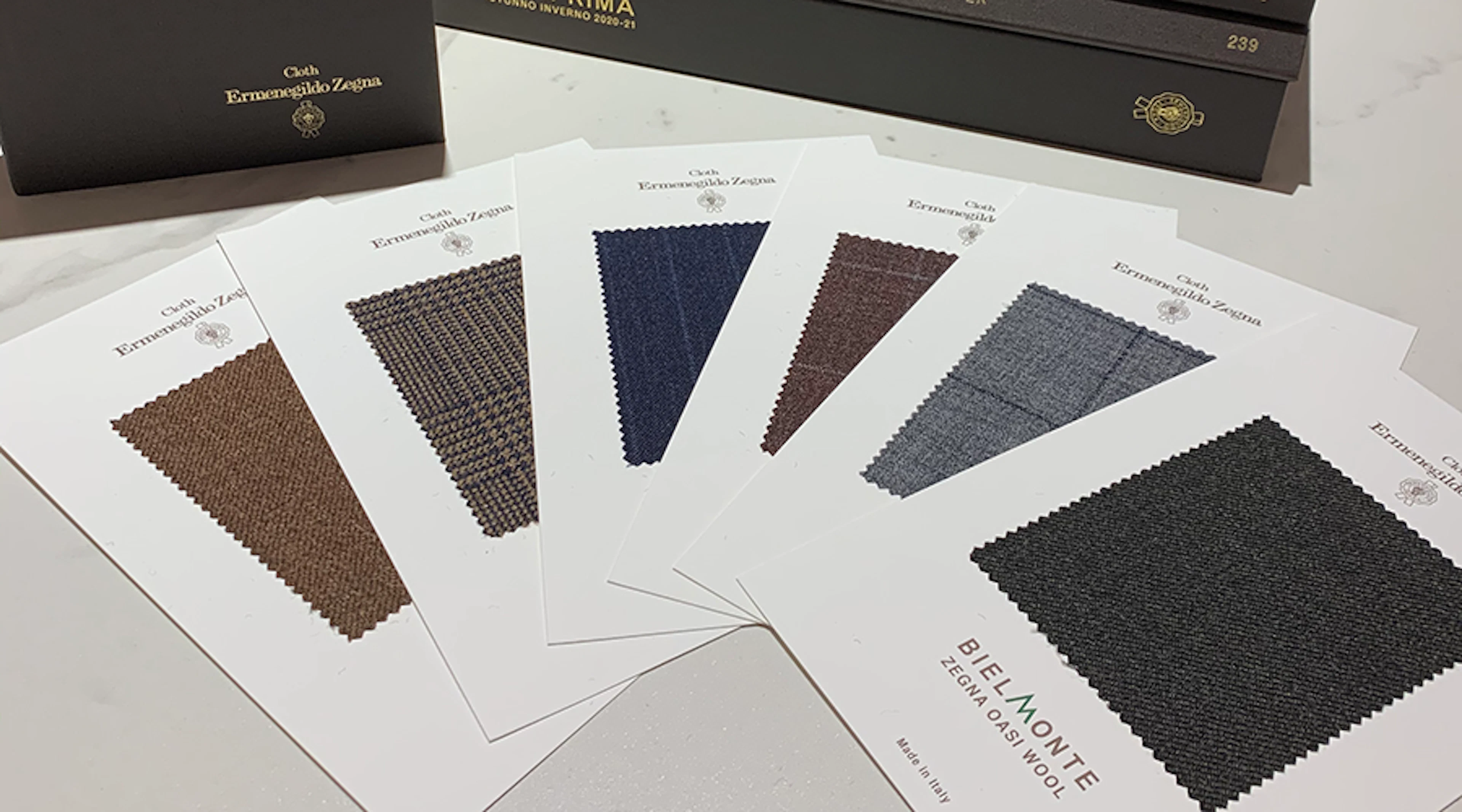
Before you start digging around in your closet for those heavy liners and frumpy parkas, bear in mind that you may not need them, barring the most extreme conditions. Even when you don't take layering into consideration, the material of your professional attire can make quite a difference in your comfort level when you have to venture outside. When it comes to suits, wool is always going to be one of your best options. The material's unique properties allow you to stay warm when it's cold outside and also cool and comfortable when the temperature starts to climb, hence its near-universal application in formal wear. Most custom suits on the market today are made from wool, so no matter what you decide to wear with yours, having a suit made from wool strands is always a good starting point. But sometimes a thicker wool might be necessary for those really cold days, and this is where flannel comes into play.
In contrast to regular wool, flannel uses thicker strands with slightly more space in between each strand, making this material ideal for winter weather. Keep in mind, however, that the term flannel is no longer exclusively used to refer to wool as it once was. Articles of clothing marketed as flannel may in fact be cotton or some other type of blend that uses synthetic fibers, so whenever you're shopping for a winter suit, always double check the labels and when in doubt, it can never hurt to give the manufacturer a call.
While wool and wool flannel are your best options for winter professional attire, you can still get away with wearing a suit made with wool/cotton blends, especially if your main concerns are budgetary. While a blend might provide less insulation than 100 percent wool, there are certain things you can do to stay a bit warmer if you choose to go this route that we'll cover shortly. Beside the price point, the other positive attribute of wool/cotton blends is a slight boost in durability, and this is particularly beneficial if your job may require extensive travel in the future.
For winter weather, it's advisable to be cautious with anything made from linen. While it's a great lightweight material for professional dress during the warmer months, its applications are limited on those cold winter days. But if for some reason all of your other suits are at the dry cleaners and you only have one made from linen for the morning, consider wearing a scarf or overcoat. The only material you should really avoid completely is anything made from synthetic fibers or composite synthetic blends. Even though these materials are highly durable, they do not breathe very well, and this can cause problems with your personal comfort level once you are no longer outside. In any event, it's best to stick to natural materials, with a greater emphasis on wool and flannel over others.
--Accessories--
Even if your wardrobe is well prepared for the winter season and wool abounds in your closet, a suit by itself may not be quite enough to keep you toasty on those frigid mornings. By adding a few accessories to your ensemble, you'll be able to keep yourself one step ahead of those dreary weather forecasts.
If you're not too big on layering or sporting overcoats, wearing a scarf is a very effective and efficient way to stay a little warmer on your way to work. Other than preventing heat escaping from the upper parts of your body, a subtle color contrast between the scarf and your suit can complement your overall personal style with very little effort. In contrast to vests or sweaters, scarves are more like neckties when it comes to color schemes and patterns; you'll have more leeway in terms of what you can get away with, so feel free to go as loud or as restrained as your personal style dictates.
While vests aren't always associated directly with winter weather, they do offer a convenient way to add another layer to your professional attire without being overly conspicuous in the same way overcoats and sweaters can be. With vests, you might have to be a little more conscious about what patterns and colors you choose so as not to detract away from the rest of your outfit, but if you prefer layering over staying bundled up all day, the vest is a versatile way to do this. If you're worried about any mismatches or fashion faux pas, consider going with a matching three-piece suit to keep your style consistent.
When it comes to sweaters, there are mixed opinions on wearing one in a strictly professional setting, as they are more commonly associated with casual attire. However, if you spent the better part of your morning scraping ice off of your windshield, it's unlikely that most workplaces will judge you for wearing one underneath your suit jacket. We would recommend sticking to solid colors that match well with whatever suit you decide to wear on a given day, and while wearing a sweater is acceptable for most practical purposes, use caution for very important engagements where even slight deviations from formal attire are frowned upon; think board meetings, court appearances, speeches, etc.
If you're fortunate enough to live in a climate where those winter mornings aren't quite as bone-chilling as they are in some of the upper latitudes, staying warm may be much simpler than having to accessorize your entire formal ensemble. Choosing a thicker fabric for your dress shirts or adding an extra layer with an undershirt may be all it takes. While the main purposes of an undershirt are to keep you comfortable from potentially itchy materials and reduce the amount of sweat transferred to your dress shirts, it also has the added benefit of giving you extra warmth without altering the appearance of your formal attire. Wearing an undershirt is especially practical when you pair white dress shirts with your suits, as it will reduce any inherent transparency in the fabric. If an undershirt by itself isn't quite enough to keep you warm and comfortable, consider choosing dress shirts that are made from slightly thicker fabrics, as this will also prevent heat from escaping your body too quickly.
Before we move on, one last thing to consider when dressing for winter weather is choosing your socks. It's one of those items that many people overlook when considering warmer formal attire, but wearing thicker socks can be quite effective. As much of the heat from the human body can escape through the feet, choosing socks that have a greater thickness than your typical dress socks can do wonders for your comfort level during colder weather. In formal settings, do your best to stick to solid dark colors so as not to detract from the rest of your outfit.
--Overcoats--
�� Last but certainly not least, overcoats are perhaps one of the easiest ways to stay warm, and the benefits often outweigh the drawbacks. With various styles and fabrics to choose from, overcoats have the ability to keep you stylish and warm simultaneously without the need for excessive layering. They're great when you're in a bit of a hurry, and you'll likely appreciate the extra pocket space if you're not keen on lugging a briefcase around everywhere you go. The only potential downside to wearing an overcoat is that some of them tend to feel heavy and might be a bit too much if the temperature outside isn't quite down to freezing just yet. When shopping for overcoats, pay close attention to the material and when possible, try them on when you're wearing a full suit to see if it gels with your comfort level.
From all of us here at Enzo Custom, we wish you a happy and healthy 2021 going forward. While we've got you covered for the winter months, stay tuned for our next installment of this article, where we'll give you tips and tricks on staying cool during the summer season. For more information on creative ways to stay warm and stylish this winter, stop into one of our showrooms or schedule an appointment with one of our expert clothiers via videoconference.
Begin With a Private Appointment
Explore cloth, fit, and occasion with an Enzo Custom clothier. Reserve a private appointment at your nearest showroom.
No obligation · By appointment
More from the Journal

On Cashmere: Grades, Origins, and What Quality Looks Like
Most men own a cashmere garment. Few can, on inspection, tell whether the garment they own is good cashmere or merely cashmere. The fiber has been so democratized — by the mall brands, by the e-commerce labels, by the seasonal sale racks — that the word itself has lost most of its meaning. The original meaning is recoverable. It requires a small vocabulary and a willingness to handle the cloth long enough to read it.

The Double-Breasted Suit, Considered
The double-breasted suit has spent much of the last forty years out of fashion, then quietly back in it, then out again. Each of these movements obscures a more durable fact: the silhouette is its own grammar, and a man who understands its rules does not need to track its returns. The double-breasted is the most architecturally distinct cut in a man’s wardrobe — and, in its proper form, the most quietly authoritative.

The Black Suit: Considered Beyond Funerals
The black suit has a complicated reputation in contemporary menswear. For decades, it was the suit a man owned for funerals — a single piece in the closet that came out only for sad occasions and was otherwise treated as too somber for ordinary wear. The recommendation in most menswear writing is to skip the black suit entirely and choose a charcoal or navy as the foundational dark suit.